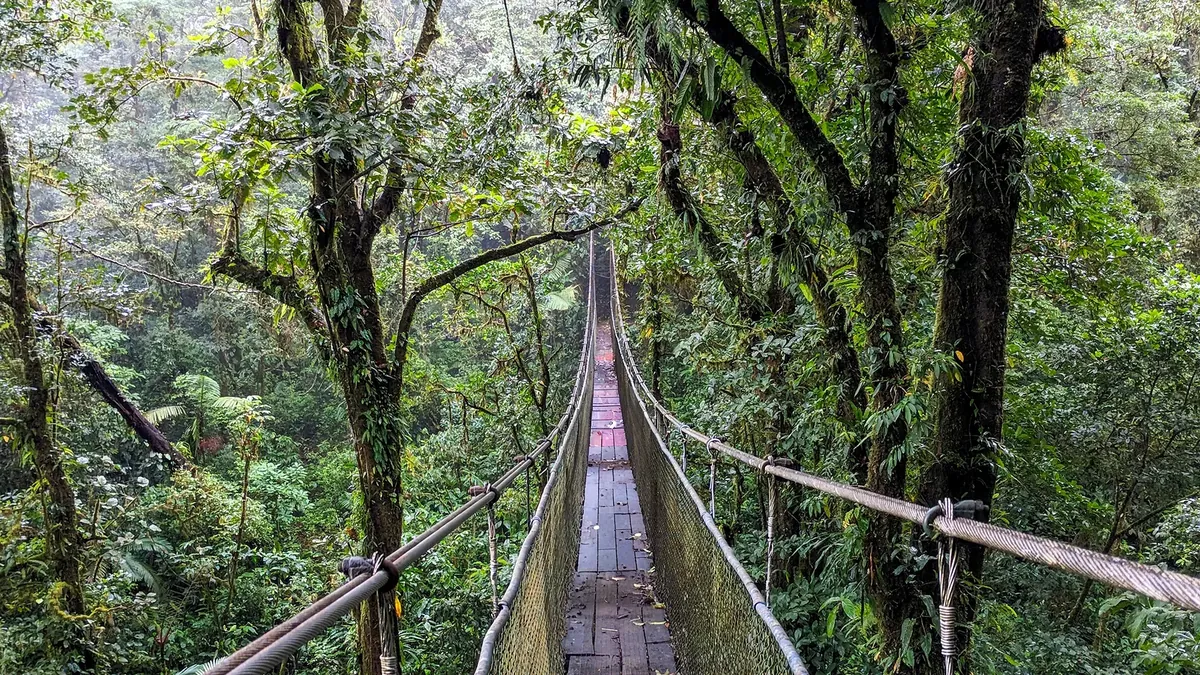
Rainforest lodge & hanging bridges
Heliconias Rainforest Lodge
Hanging bridges through 70 hectares of primary forest.
Read our guide →
Plan your visit
How to get here, when to come, what to pack, and how to fit the best of the valley into a few unforgettable days.
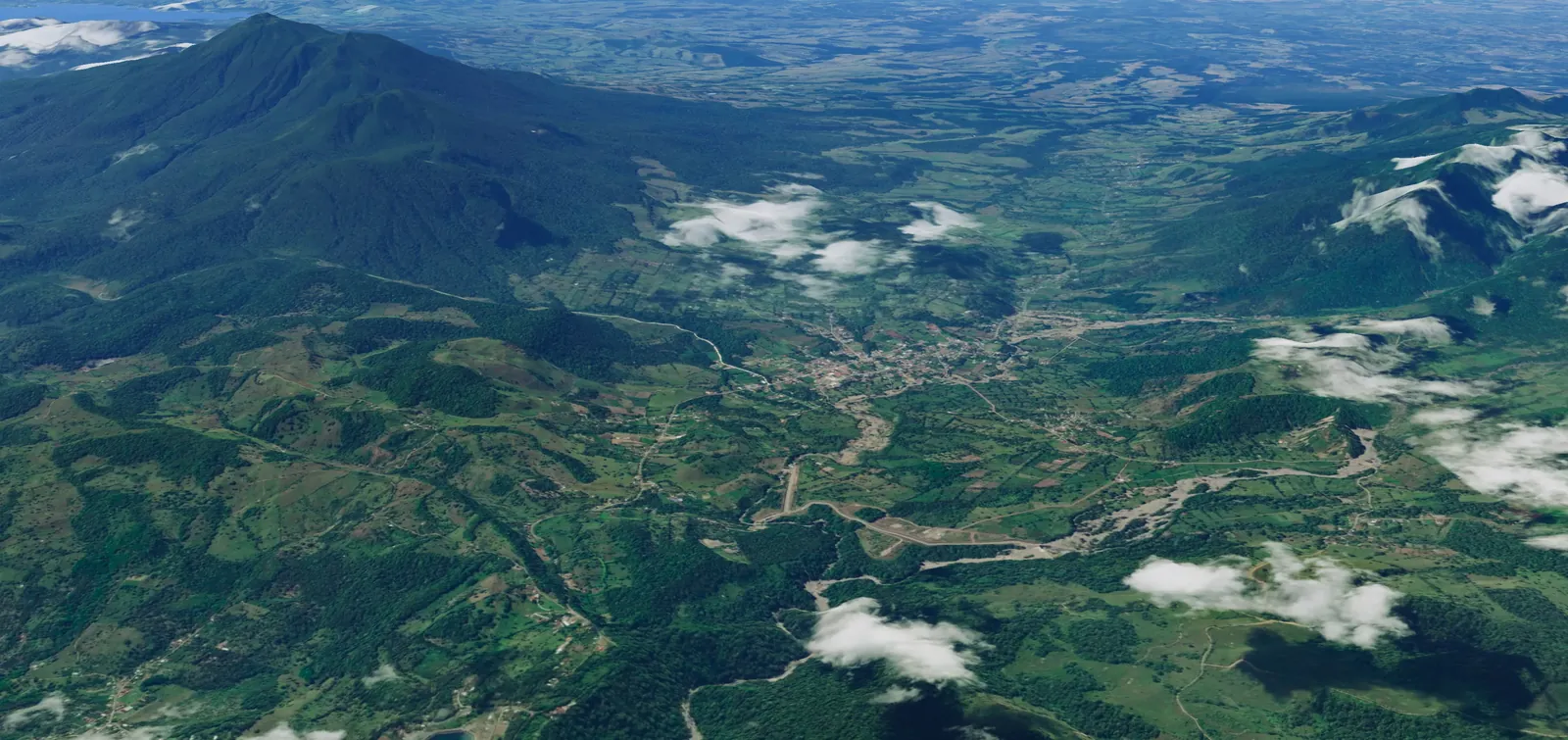
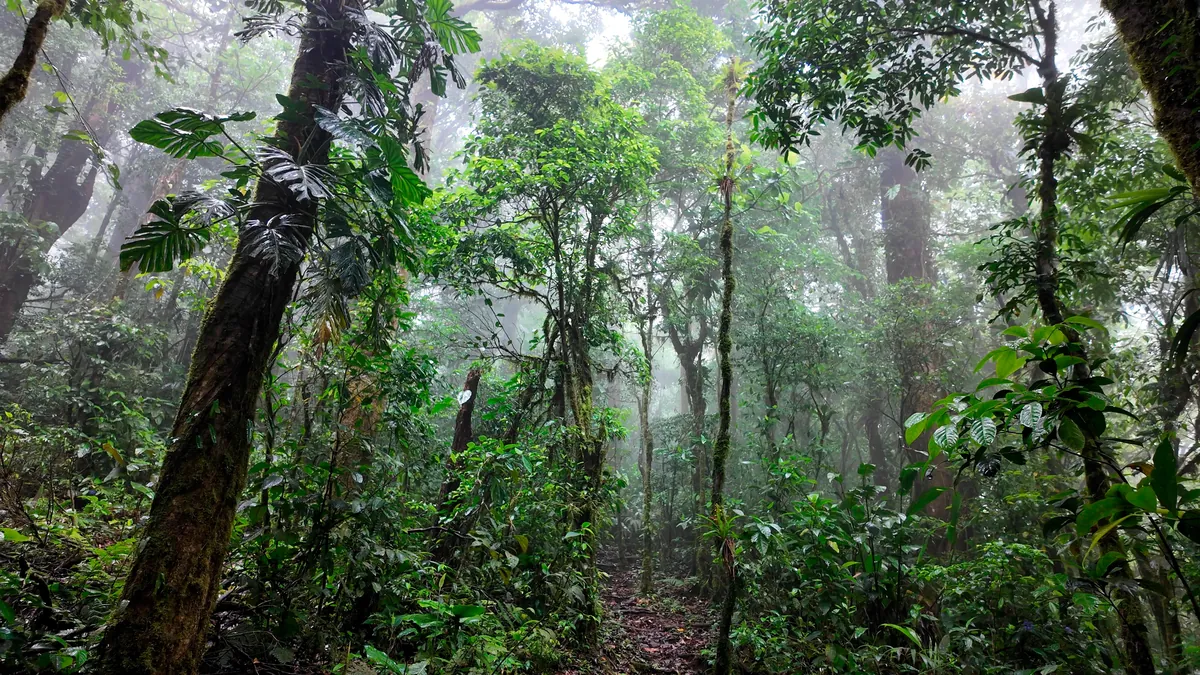
Pictured The Bijagua valley
Bijagua de Upala sits on Route 6 in northern Costa Rica, in the valley between the Tenorio and Miravalles volcanoes. It is an easy detour between Arenal and the Guanacaste coast.
| From | Approx. drive | Route |
|---|---|---|
| Liberia airport (LIR) | 1.5–2 hours | Route 1 south to Cañas, then Route 6 north |
| San José airport (SJO) | 3.5–4 hours | Route 1 north to Cañas, then Route 6 north |
| La Fortuna / Arenal | 2.5–3 hours | Via Tilarán and Cañas, or via Upala |
| Guanacaste beaches | 2–3 hours | Via Liberia, then Route 1 and Route 6 |
Times are estimates and vary with traffic and weather. Route 6 is paved, but some lodges and reserves are reached by gravel roads, so a car with decent clearance makes life easier. Private shuttles from Liberia, Arenal and the beaches can also be arranged.
There is no bad time for wildlife in Bijagua, but each season has its own character.
Three nights lets you see Bijagua by day and by night without rushing. Here is how we would spend them.
Sleeping in the forest means birdsong at dawn and night walks right outside your door.
Rainforest lodge & hanging bridges
Hanging bridges through 70 hectares of primary forest.
Read our guide →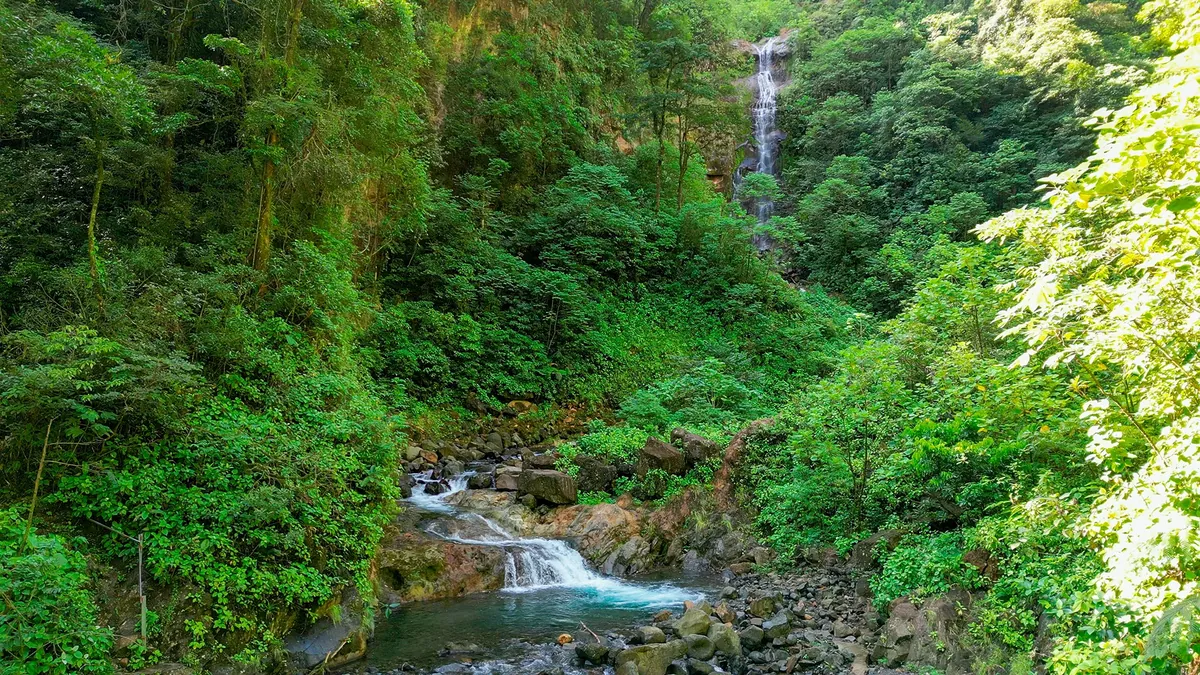
Lodge & waterfall trail
Wooden bungalows and a private trail to a jungle waterfall.
Read our guide →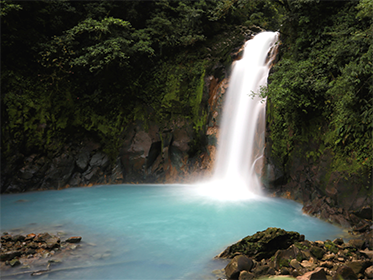
Just up the road from Bijagua, the Río Celeste turns an unreal shade of sky blue. The color comes from a natural optical effect where two clear streams meet and minerals in the water scatter sunlight. The main trail in Tenorio Volcano National Park leads to the Río Celeste waterfall, a blue lagoon, bubbling hot springs and the teñideros, the spot where the river changes color.
Bijagua is a small town in the canton of Upala, Alajuela province, in northern Costa Rica. It sits on Route 6 between Cañas and Upala, in the valley between Volcán Tenorio and Volcán Miravalles.
The drive from Liberia (LIR) takes roughly 1.5 to 2 hours: head south on the Interamericana (Route 1) to Cañas, then north on Route 6 to Bijagua. Private shuttles can also be arranged.
The Río Celeste area of Tenorio Volcano National Park is roughly 20 to 30 minutes’ drive from Bijagua, depending on where you stay. It makes an easy half-day or day trip.
Wildlife can be seen year-round. February to April is usually the driest period. The green season brings more rain but also lush forest and the most active frogs, and northern migrant birds boost the bird list from roughly October to April.
For nature lovers, absolutely. It is one of the most reliable places in Costa Rica to see a wild Baird’s tapir, a top area for foothill birds such as the Snowcap and Tody Motmot, and a quieter, more local alternative to busier destinations, with Río Celeste on the doorstep.
Yes. Many visitors hike Río Celeste in the morning and join the Tapir Valley night tour in the evening, which is also the best time for tapirs.
Explore with a local naturalist
Bijagua Nature Tours runs private day and night tours across the valley, from Tapir Valley to the Heliconias hanging bridges.