Wildlife guide
The wildlife of Bijagua
Tapirs, toucans, tiny hummingbirds, glass frogs and golden vipers: a field guide to the animals you can meet in the valley, and where to look for them.
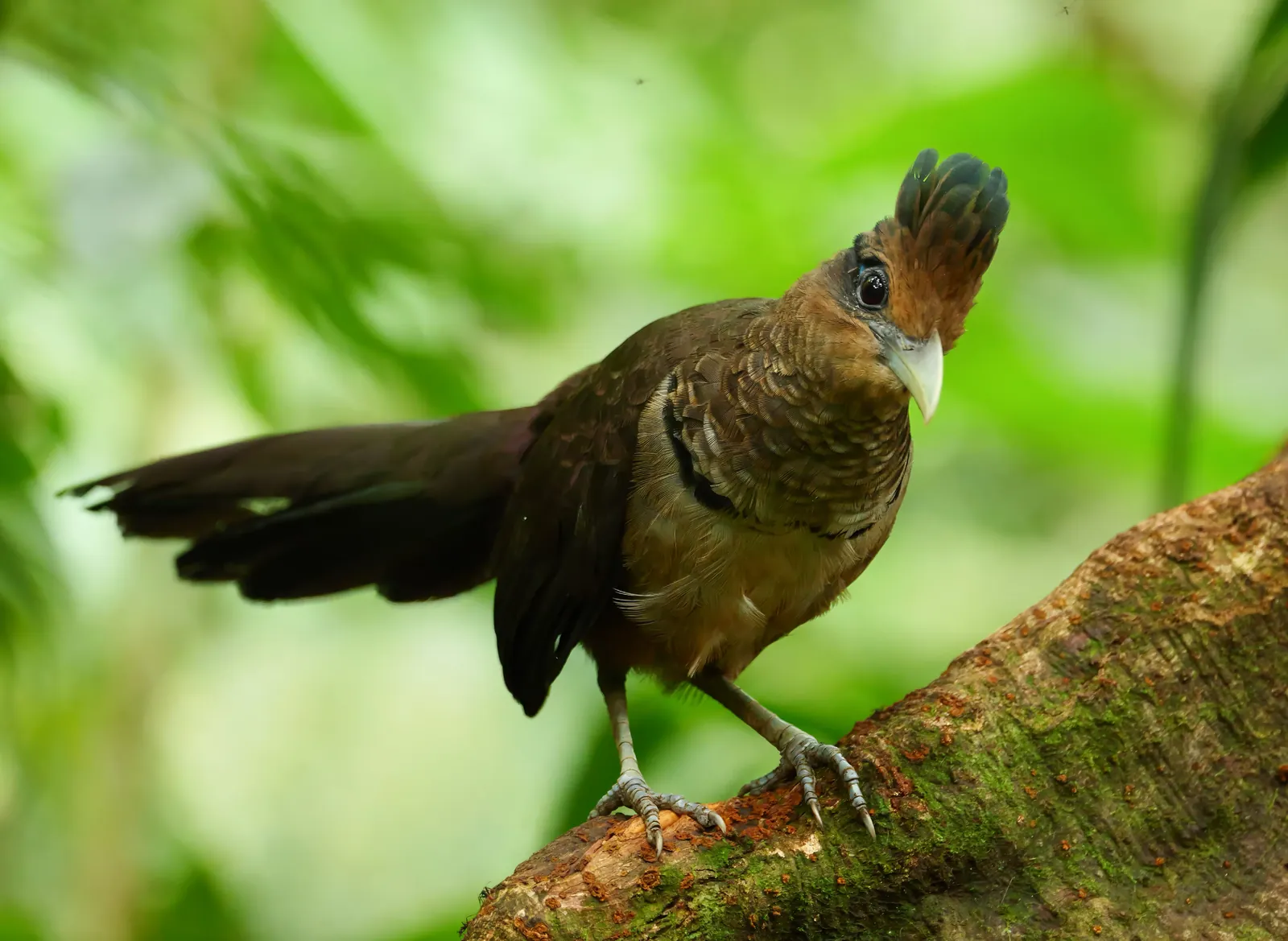
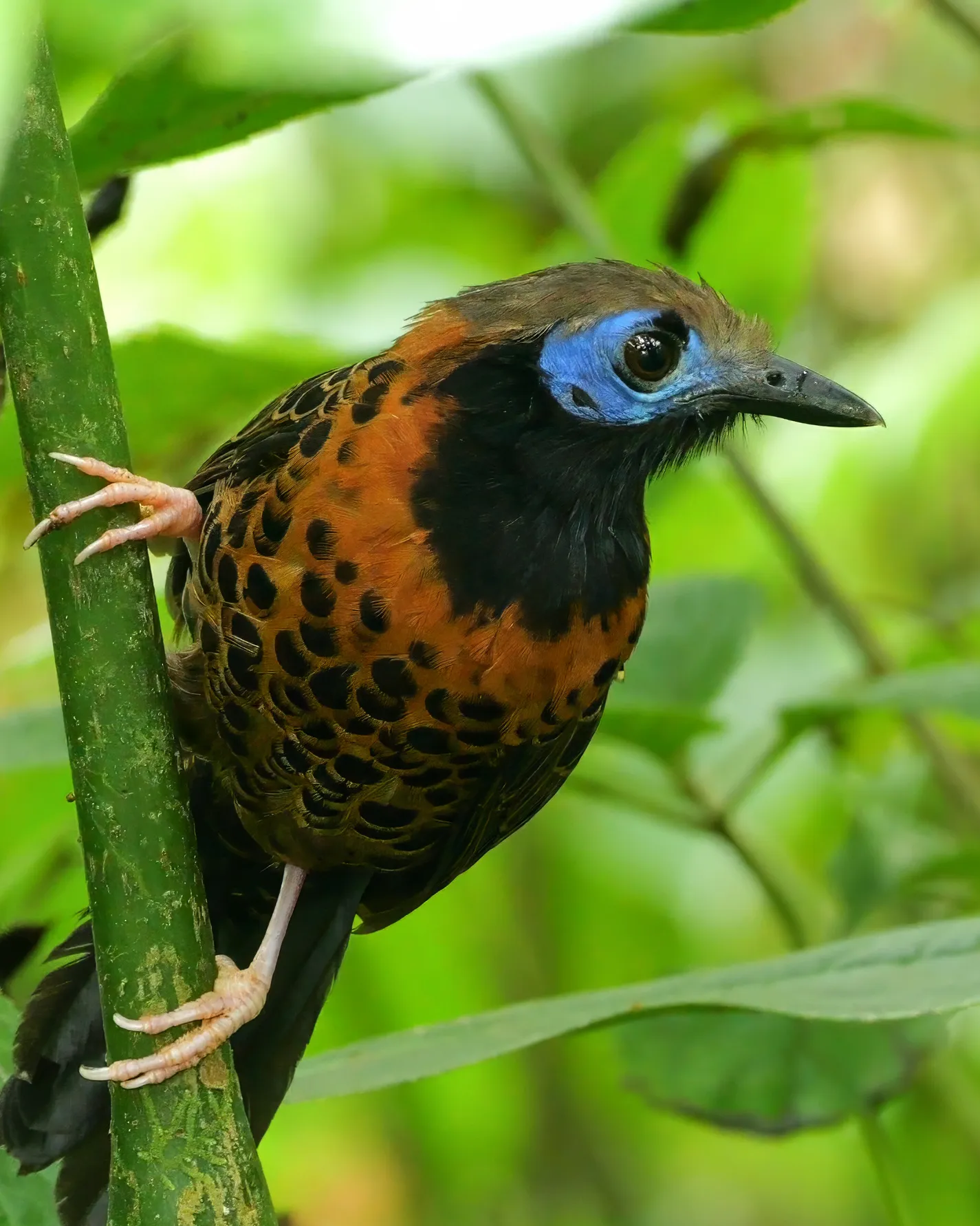
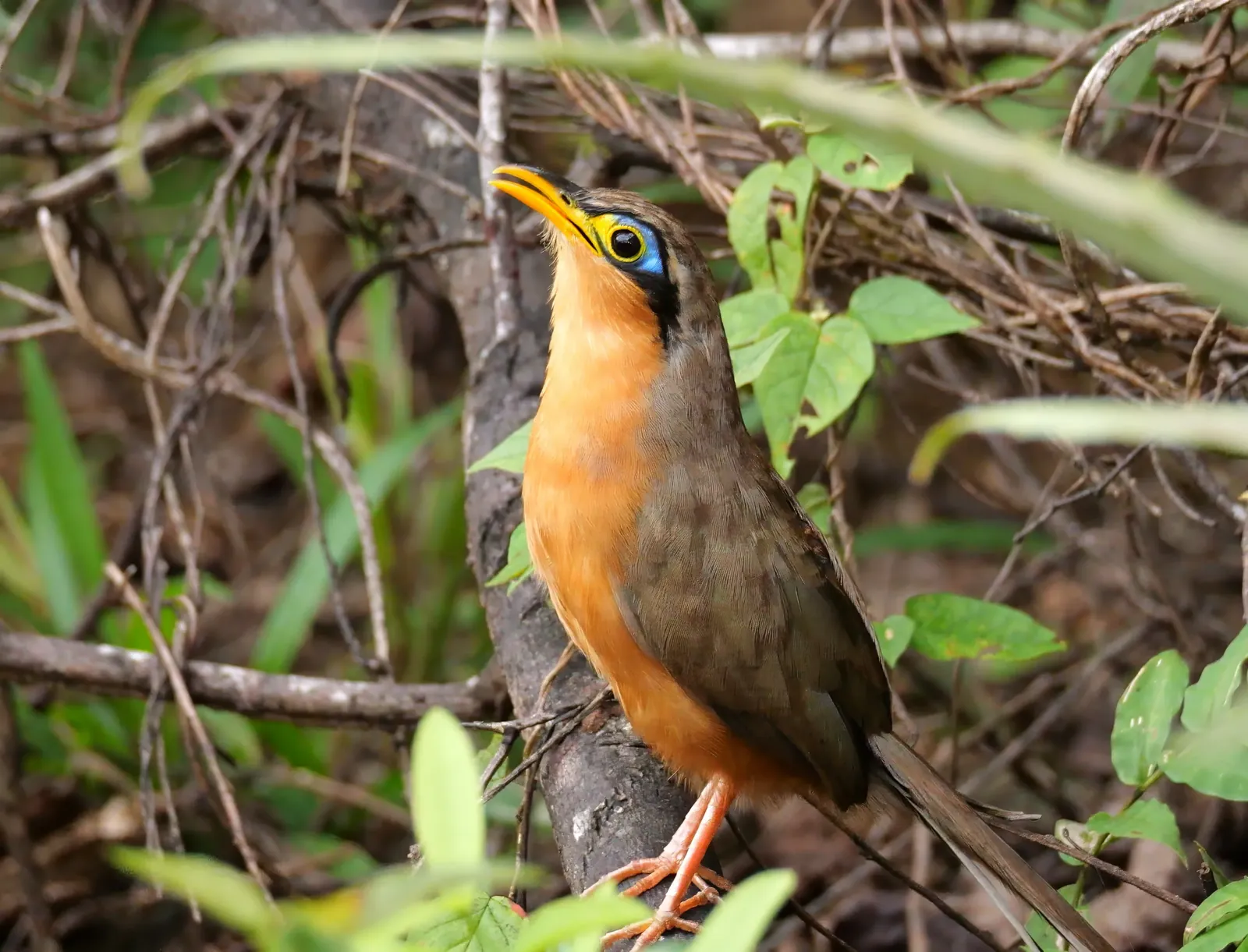
Pictured Rufous-vented Ground-Cuckoo
The star of Bijagua
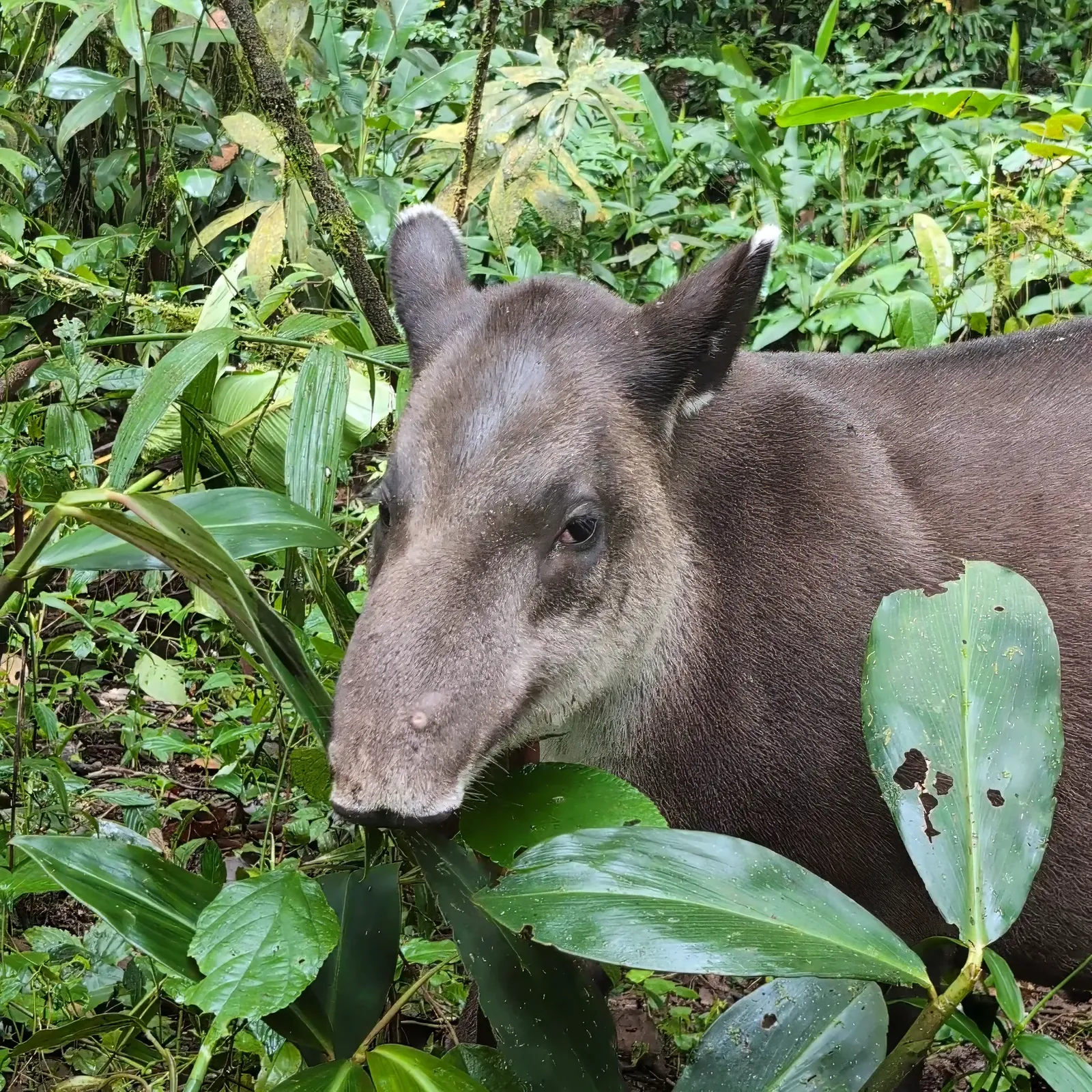
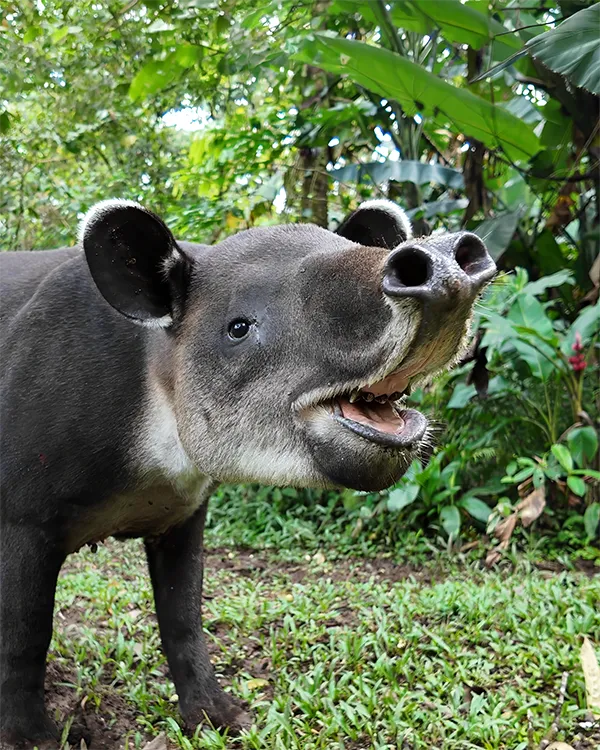
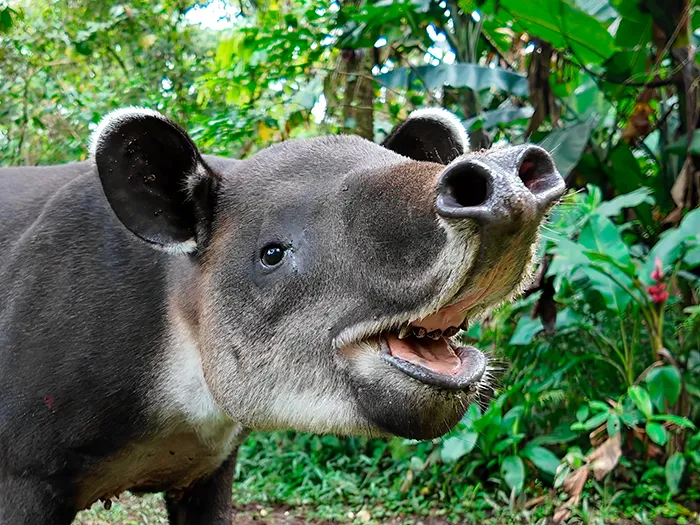
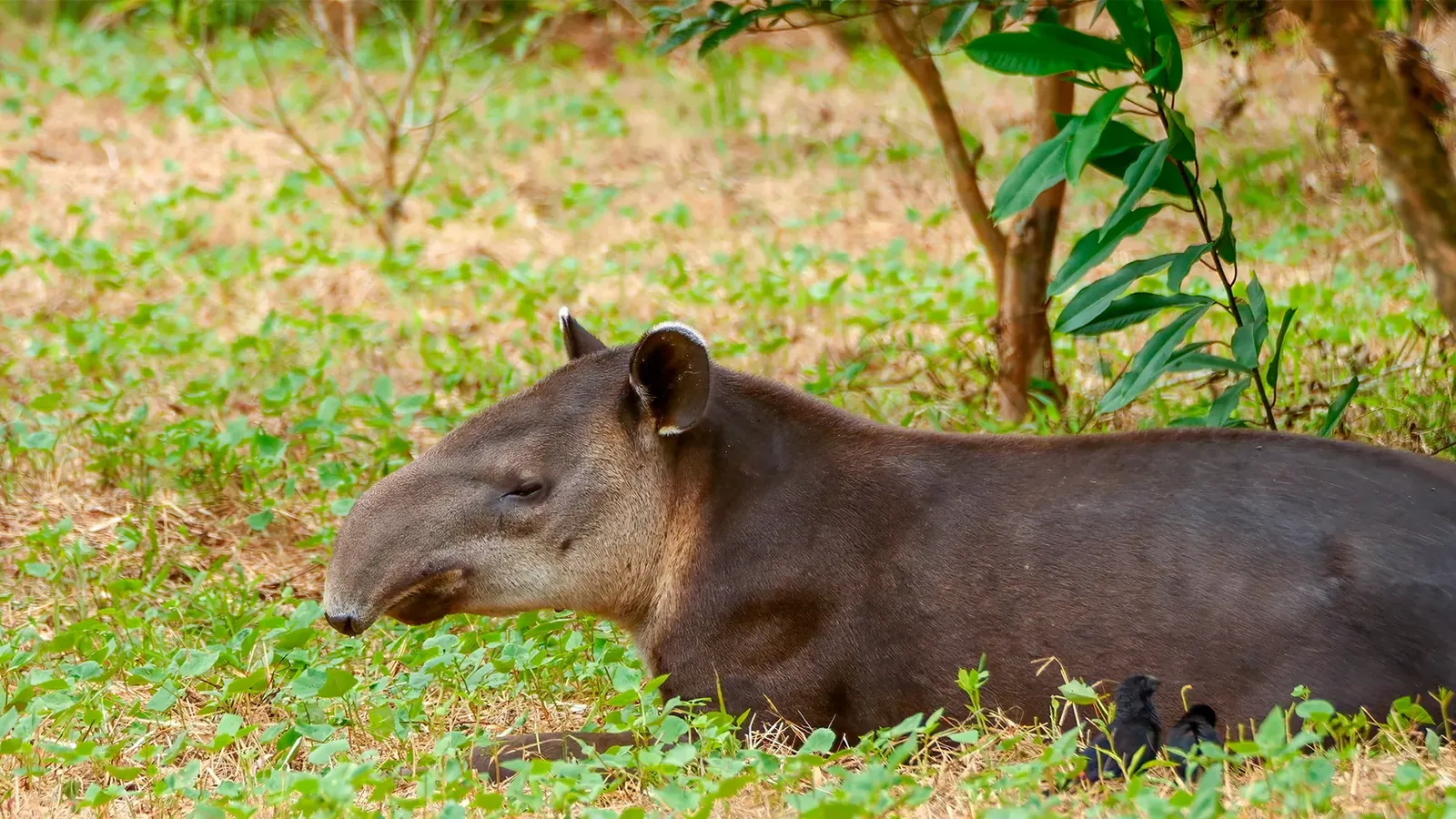
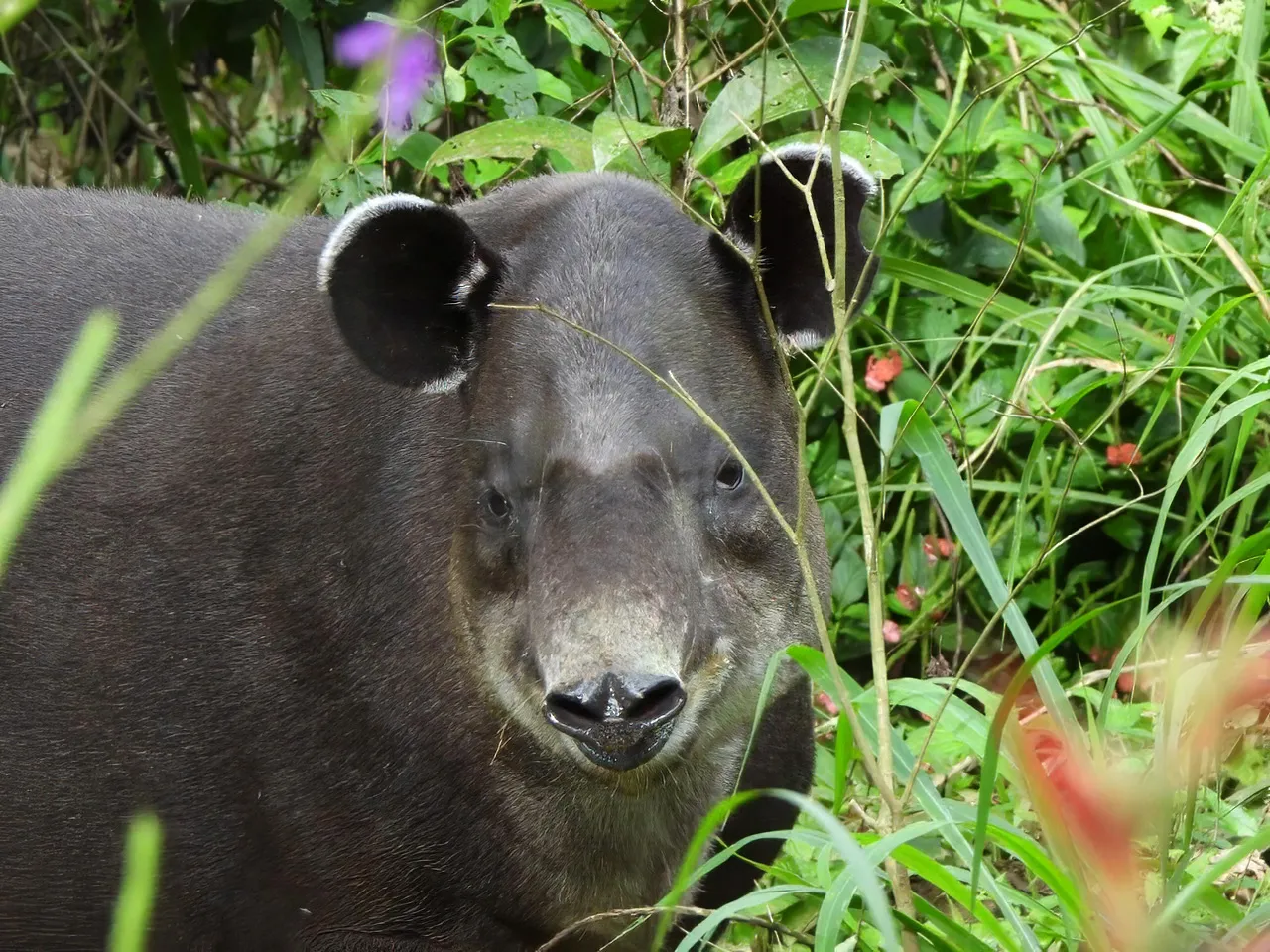
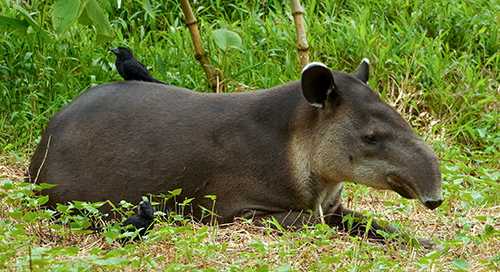
Baird’s tapir
- Scientific name
- Tapirus bairdii
- Status
- Endangered (IUCN)
- Weight
- Up to about 300 kg
- Best time
- Dusk and night
Weighing up to 300 kilograms, the Baird’s tapir is the largest land mammal in Central America, and one of its most endangered. Costa Ricans call it the danta.
With a flexible snout like a short trunk, a body built for pushing through thick forest and a taste for leaves and fallen fruit, the tapir is a gardener of the rainforest: it spreads seeds wherever it walks. Hunting and habitat loss wiped tapirs out of much of their range. In Bijagua, restored forest corridors linking Tenorio Volcano National Park with the valley have brought them back. They are mostly active from dusk into the night, which is why night tours offer the best chance of an encounter.
440+ species recorded locally
Birds
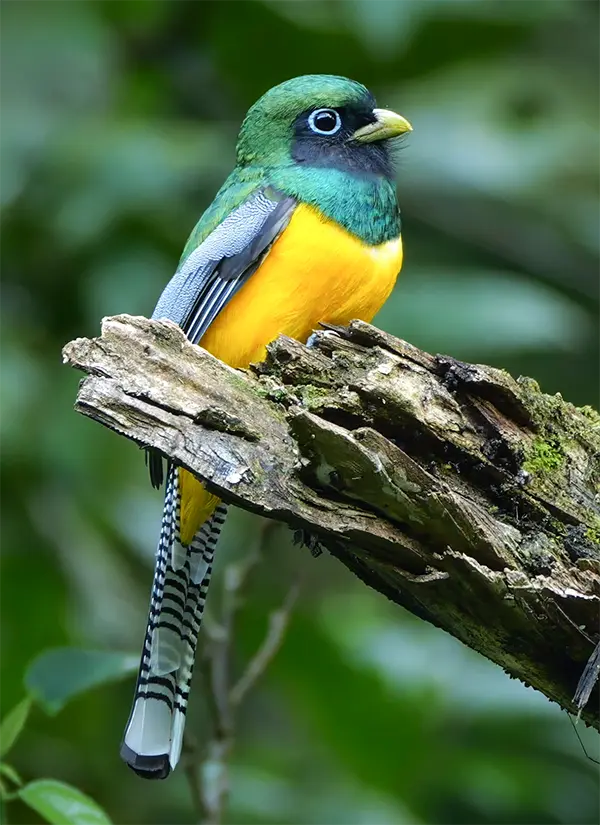
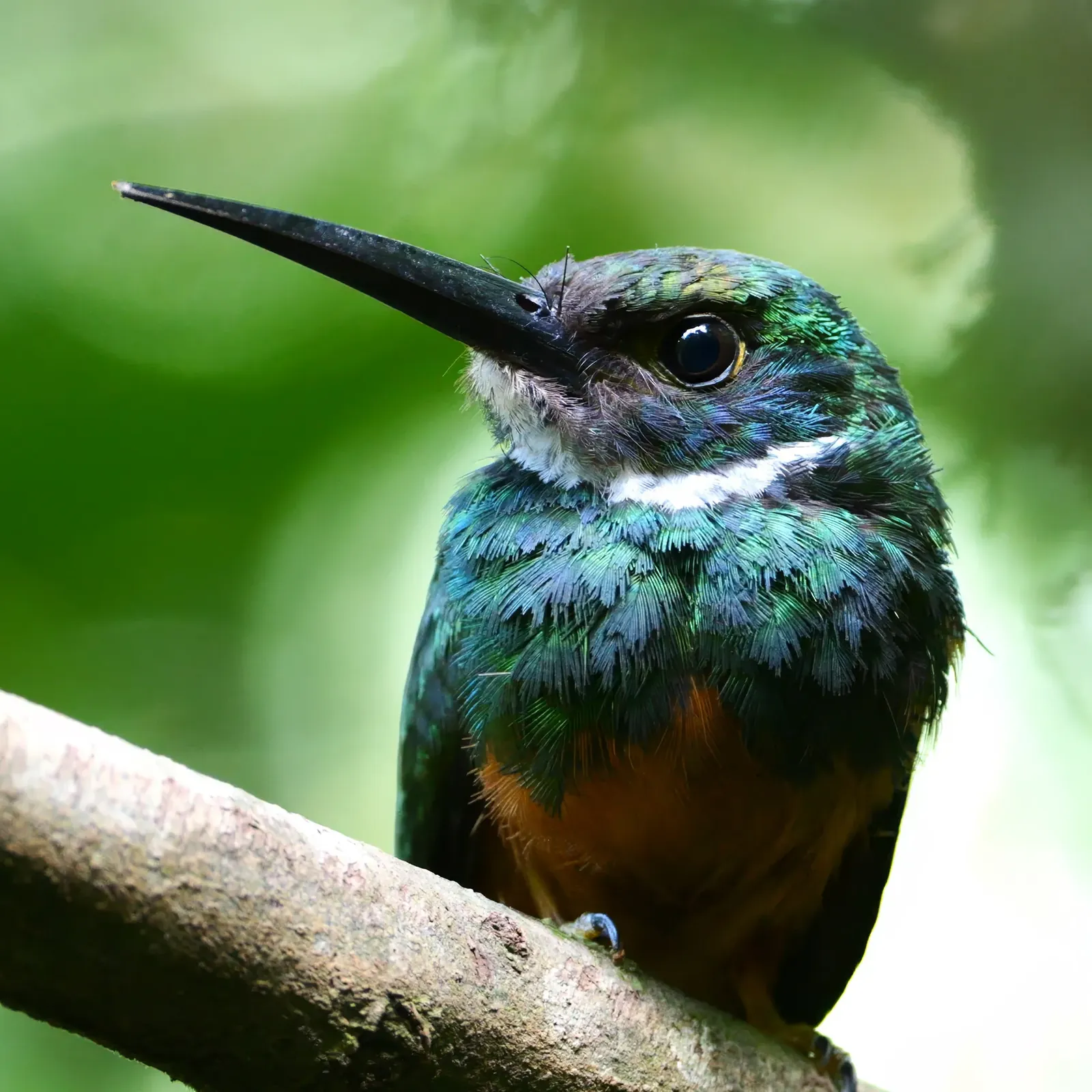
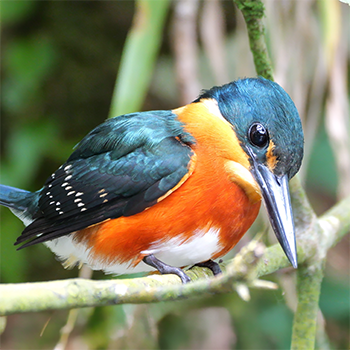
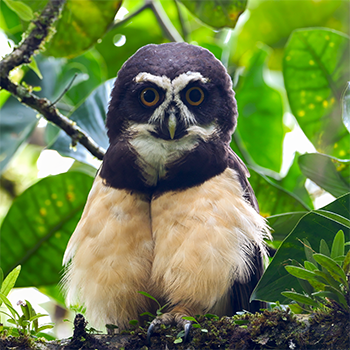
Bijagua sits on the Caribbean foothills, where lowland and mountain birds overlap. The result is one of the richest birding areas in northern Costa Rica.
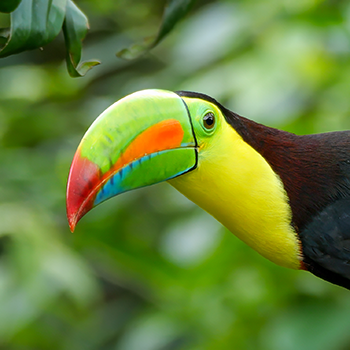
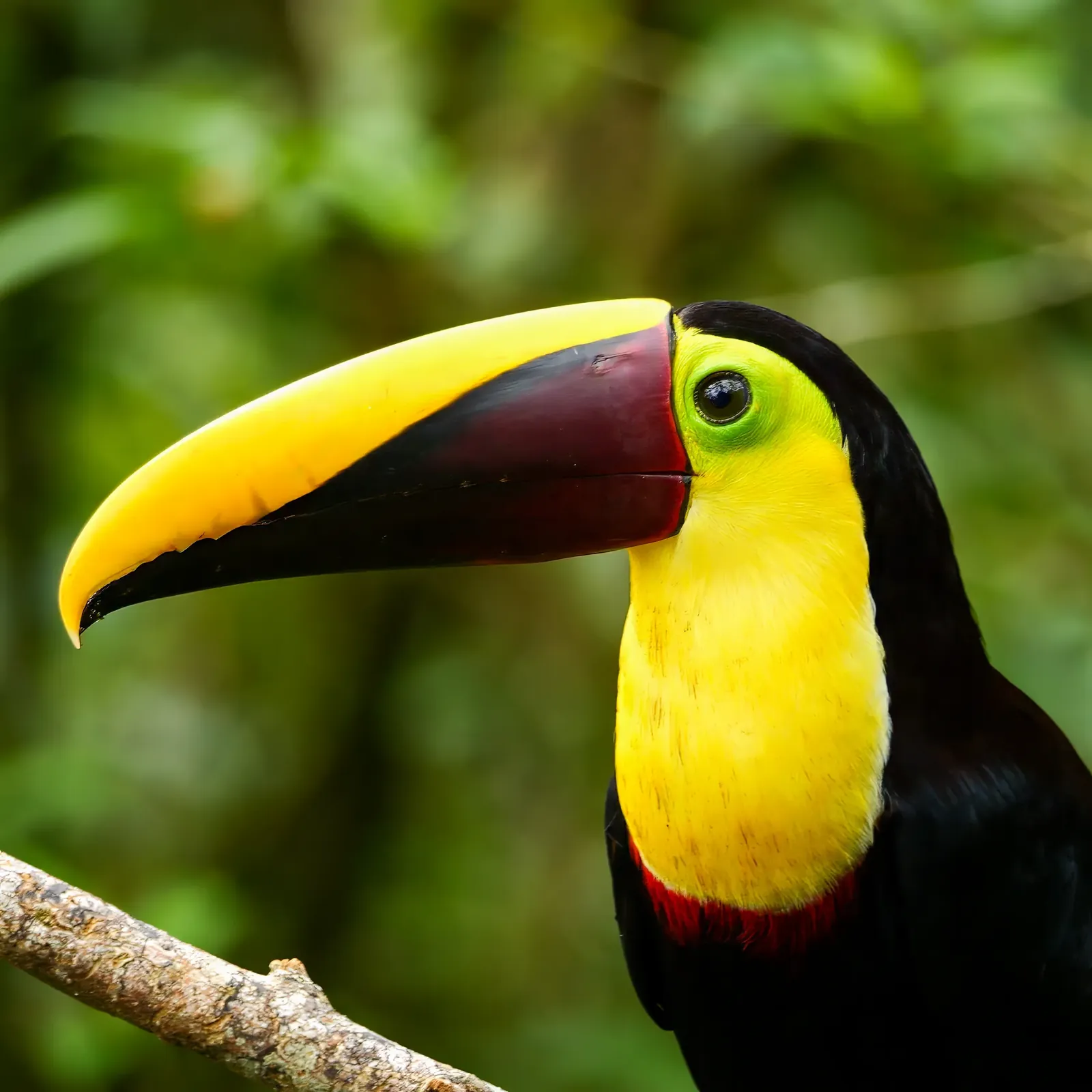
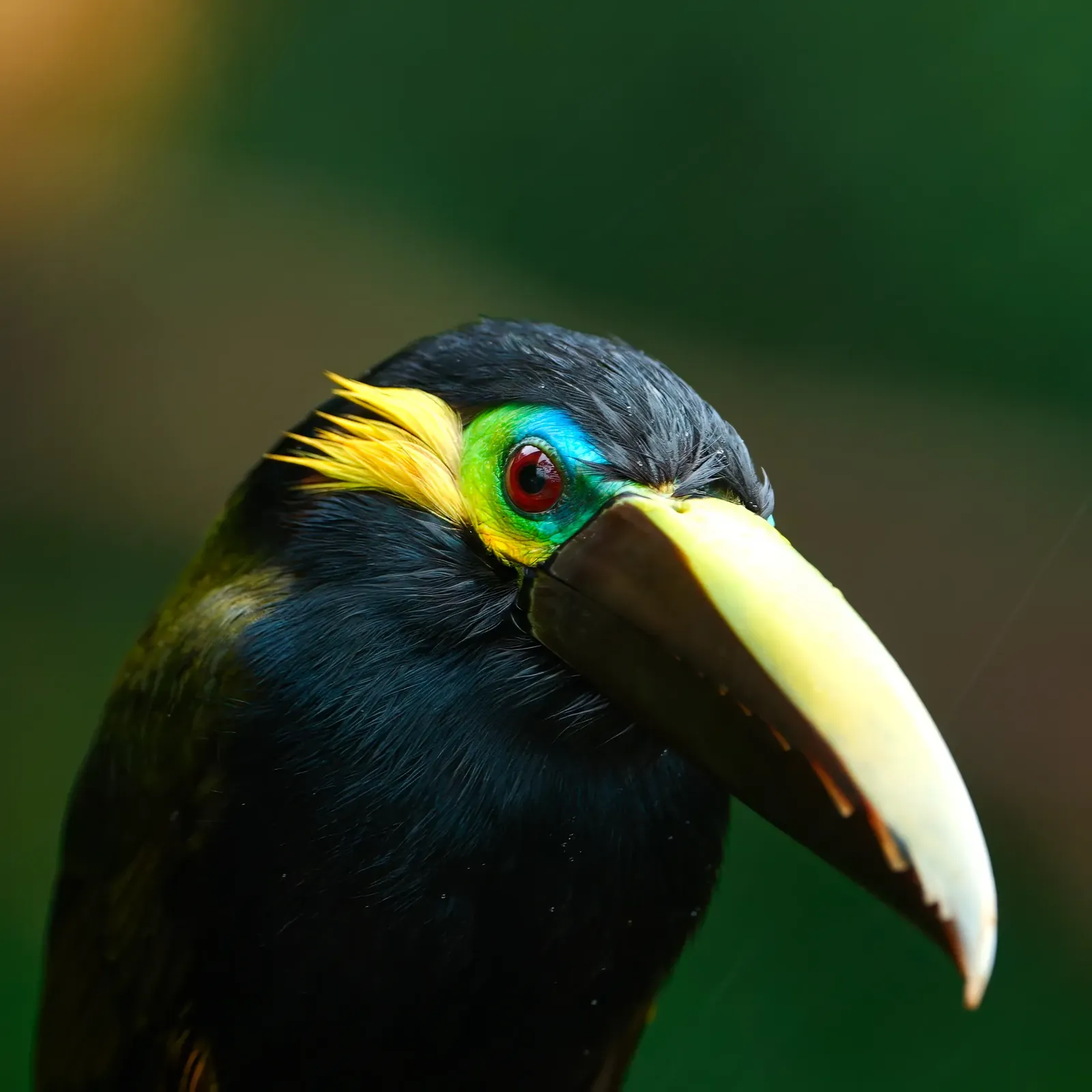
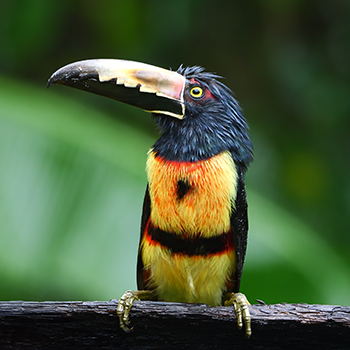
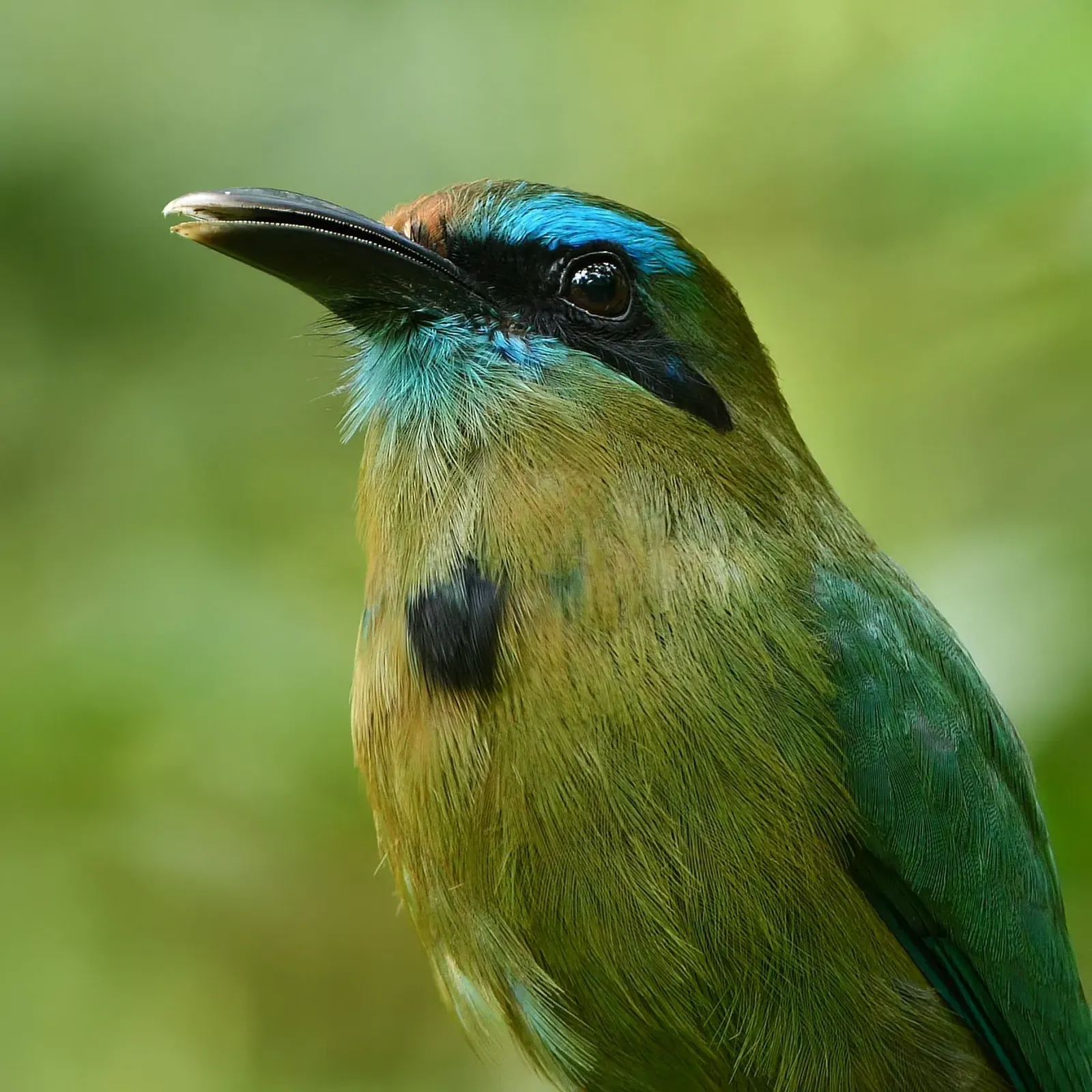
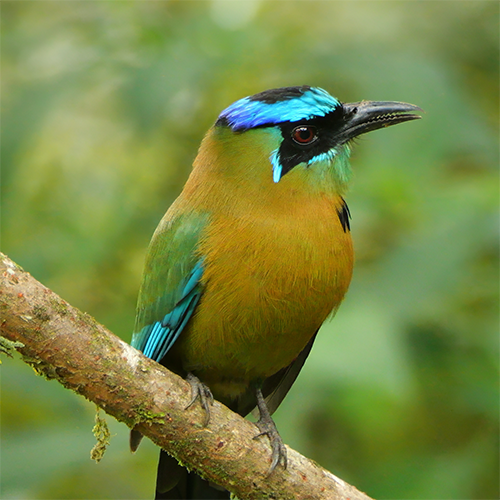
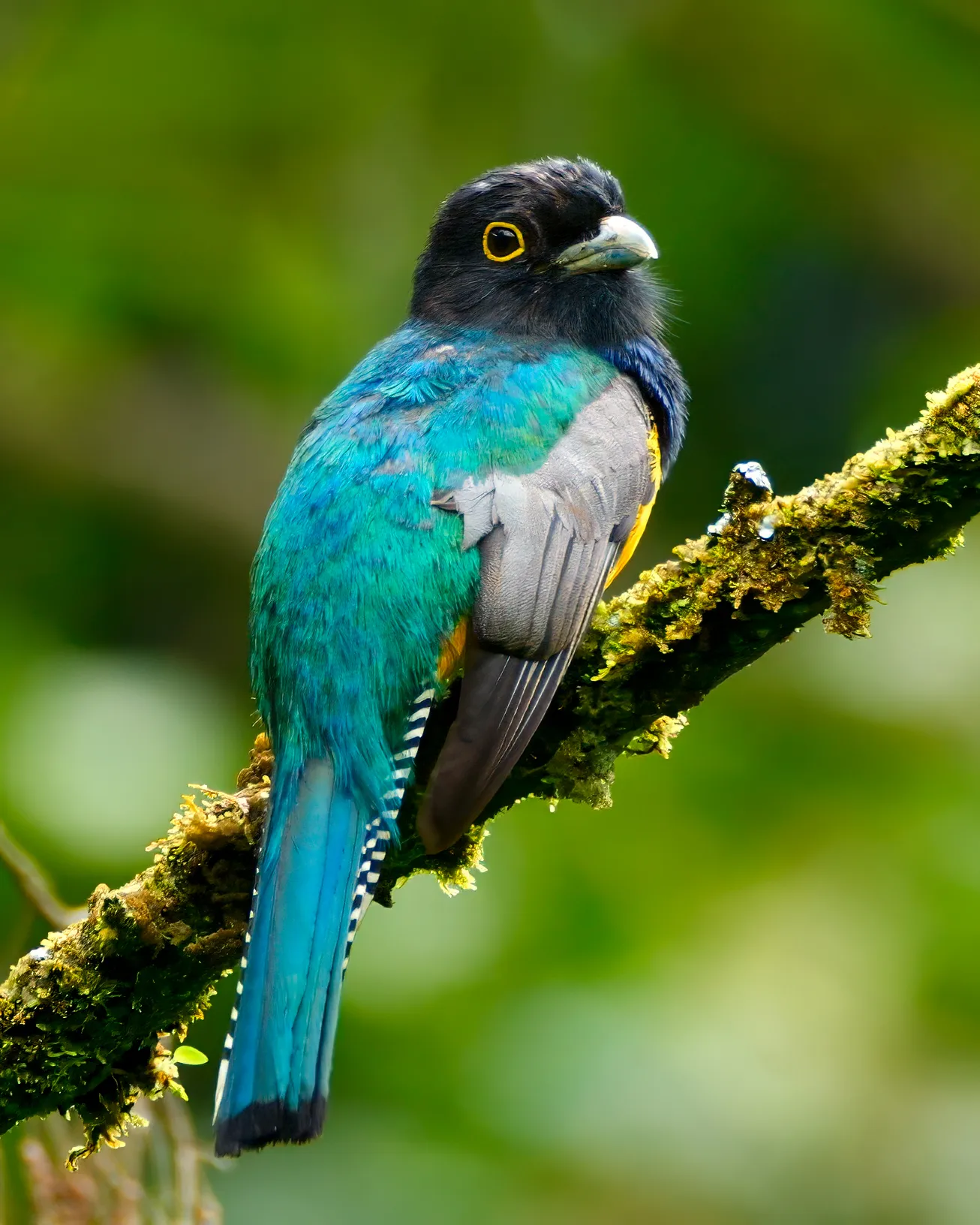
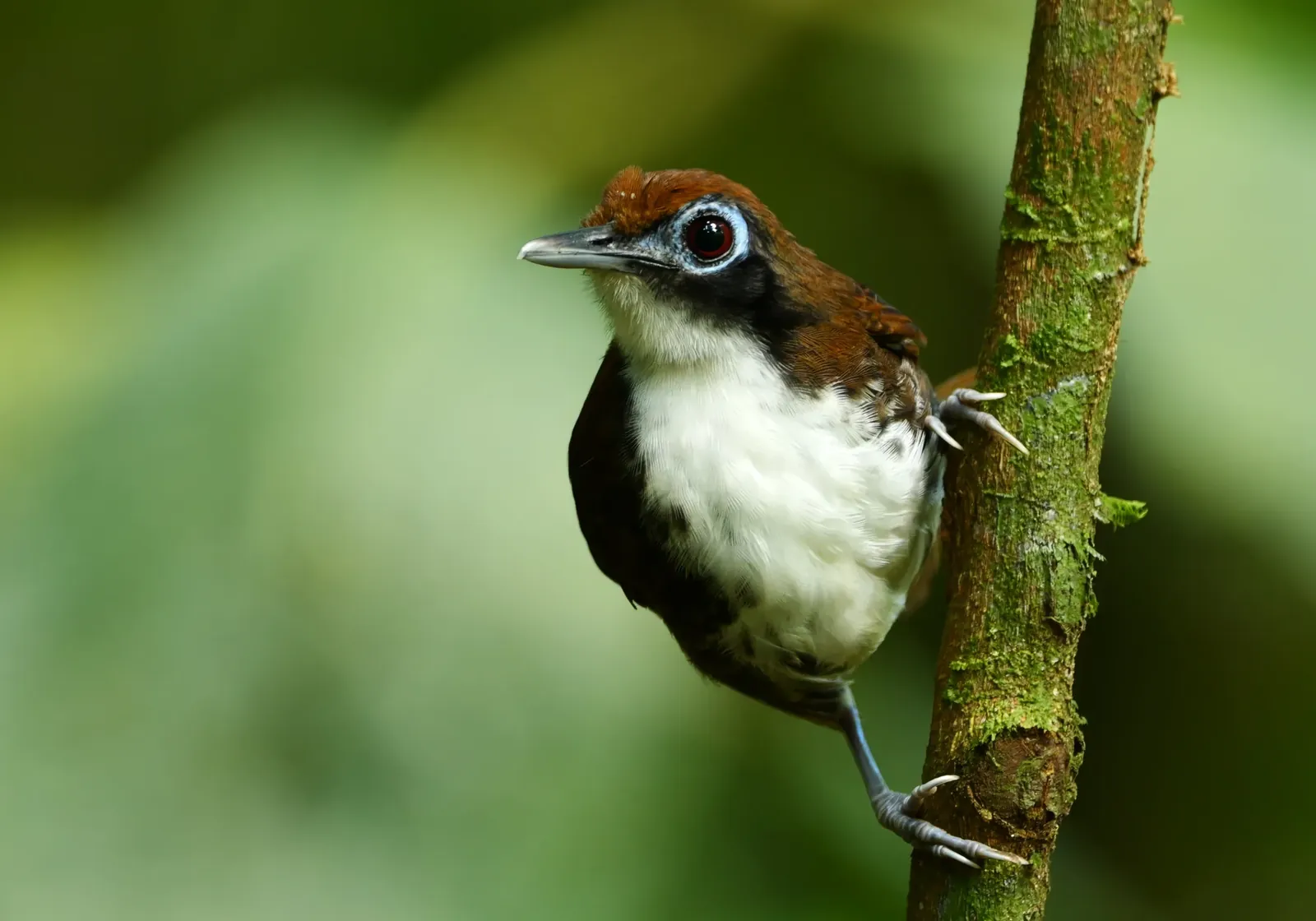
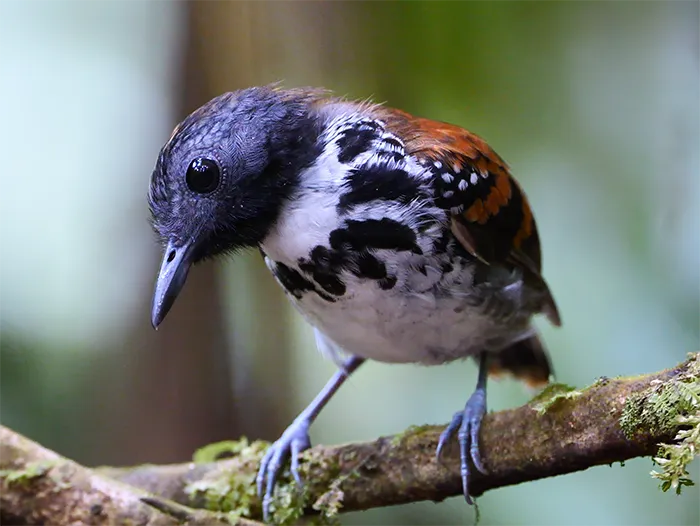
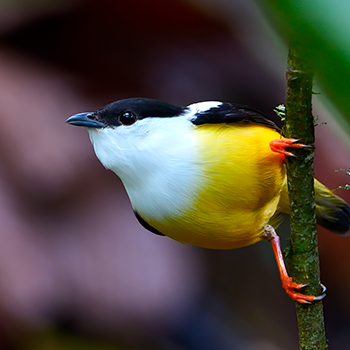
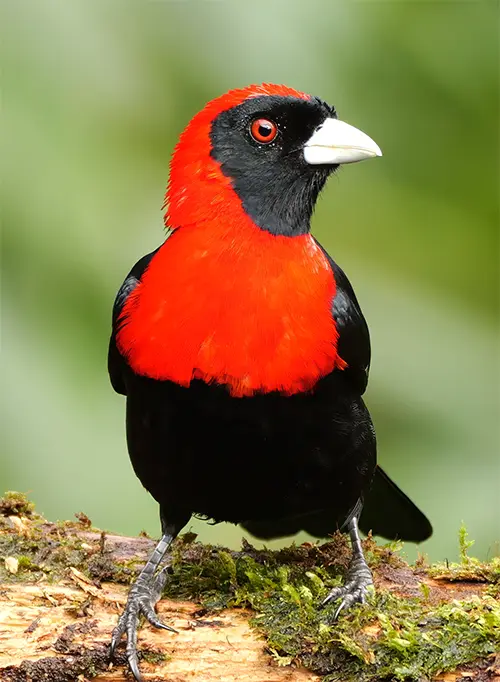
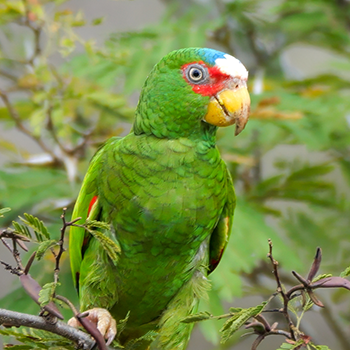
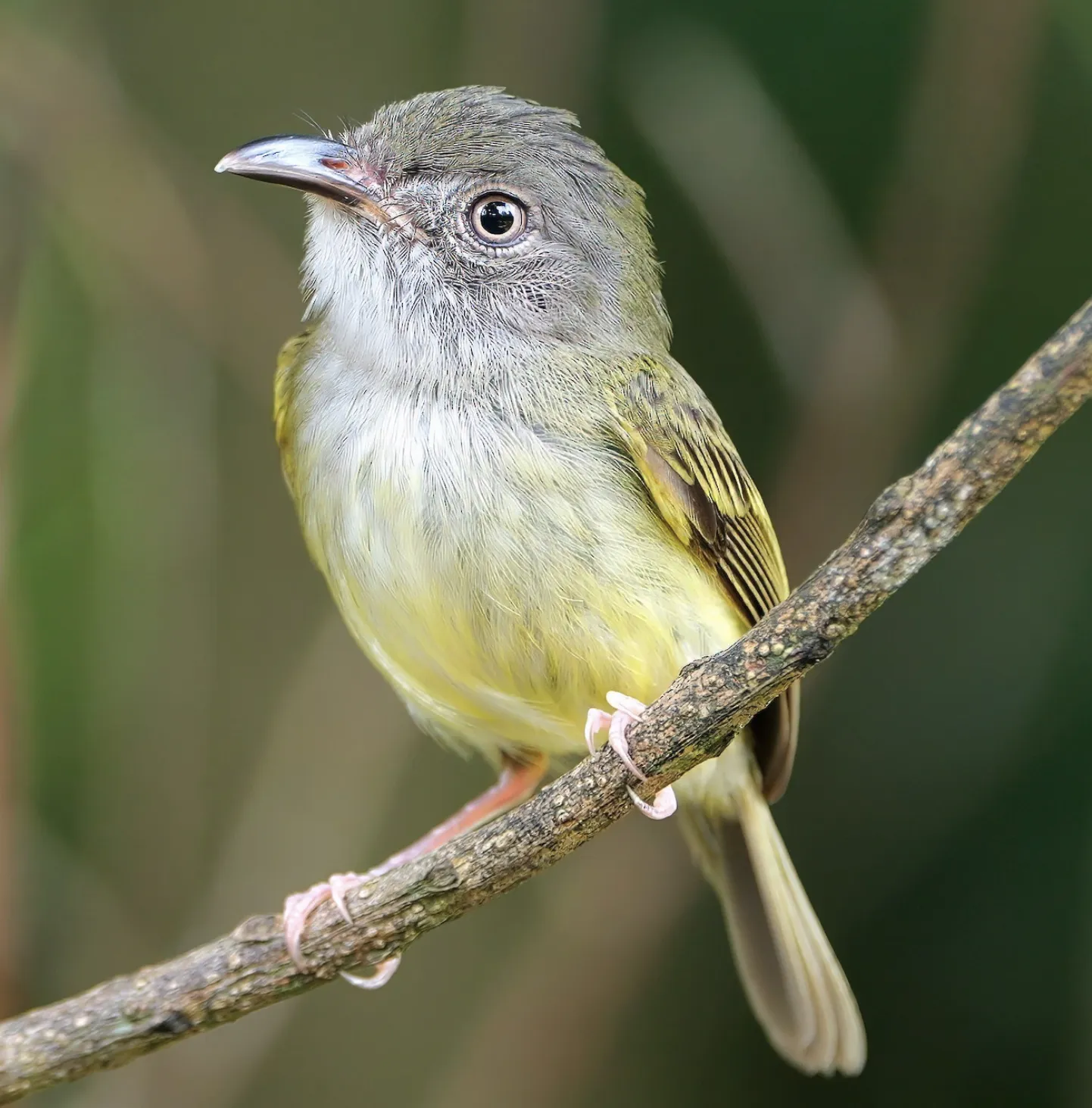
Toucans and aracaris call from the treetops, trogons and motmots sit quietly in the mid-story, and antbirds follow army-ant swarms across the forest floor. Birders come for regional specialties such as Tody Motmot, Yellow-eared Toucanet and Black-eared Wood-Quail, and dream of the rare Rufous-vented Ground-Cuckoo. A guided morning at Tapir Valley often logs around 100 species.
Tiny jewels
Hummingbirds
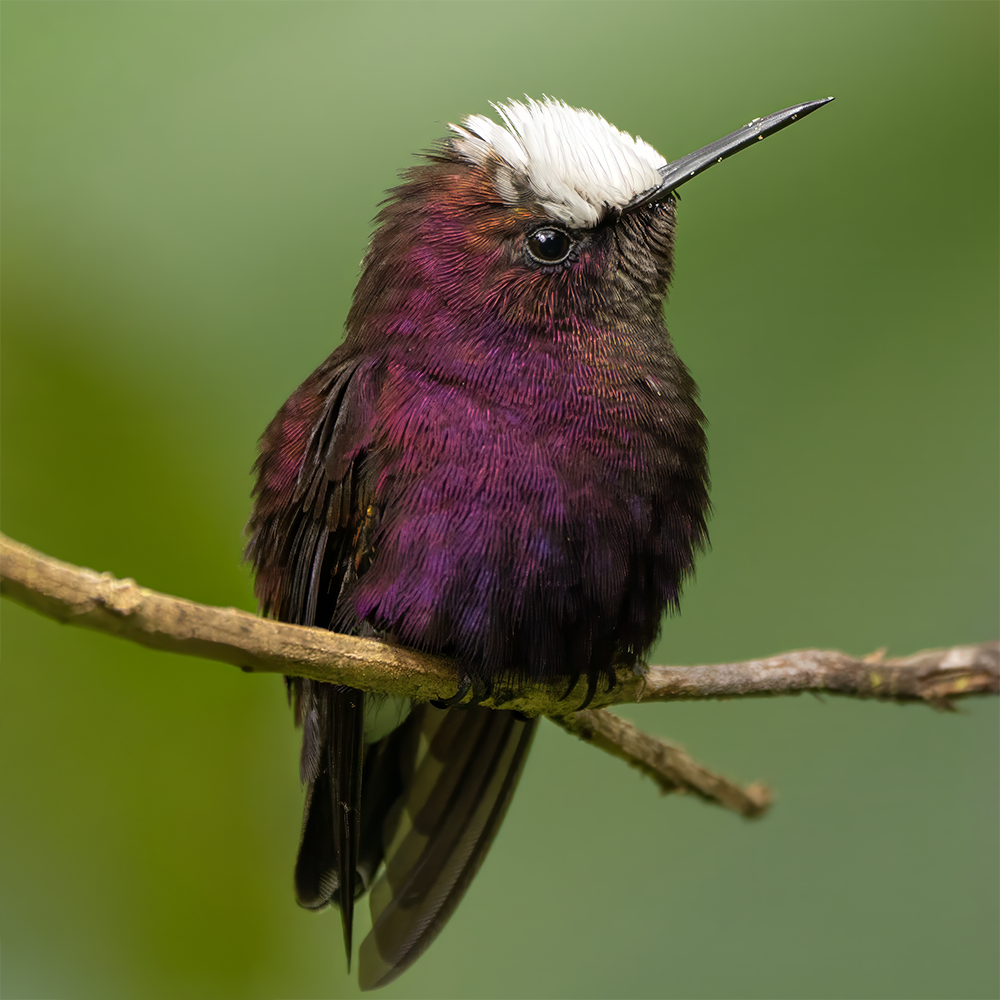
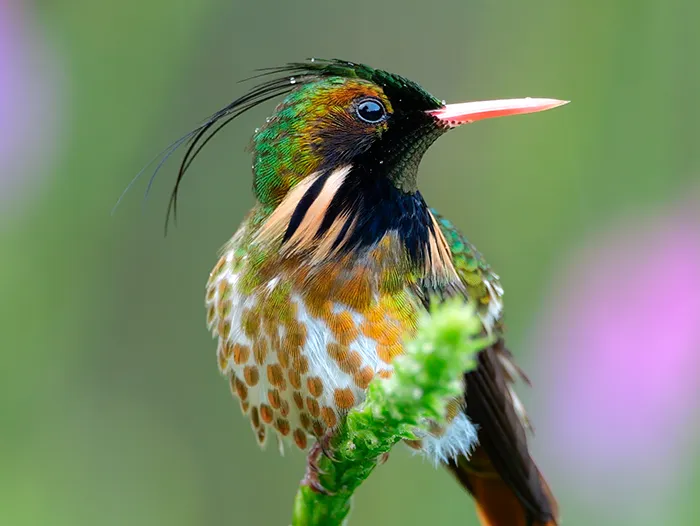
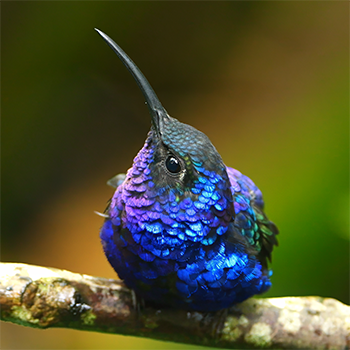
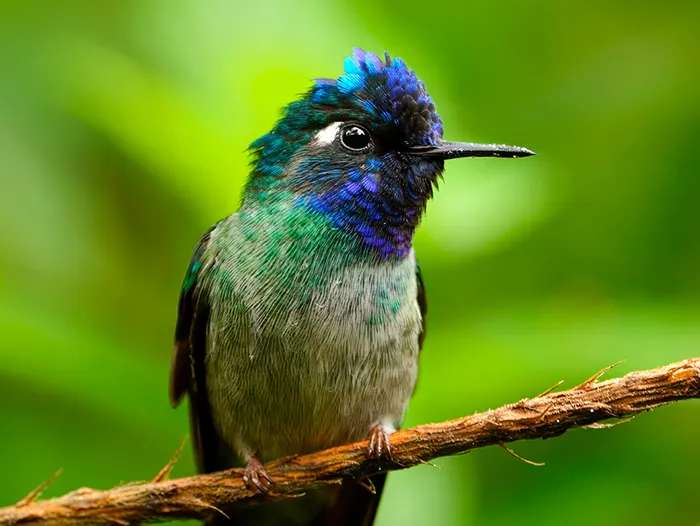
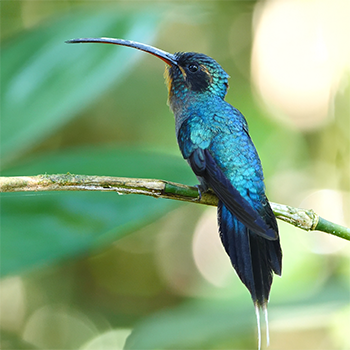
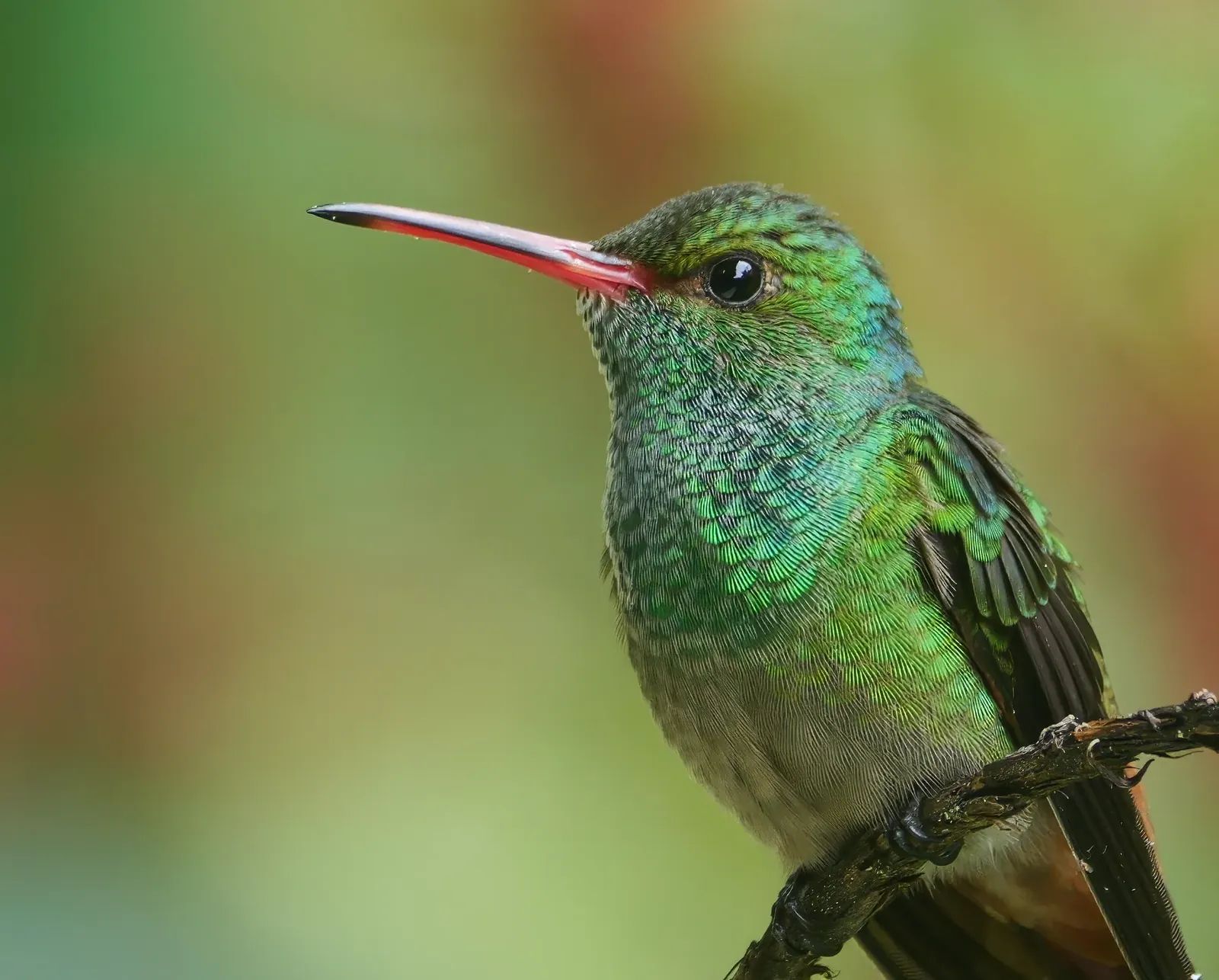
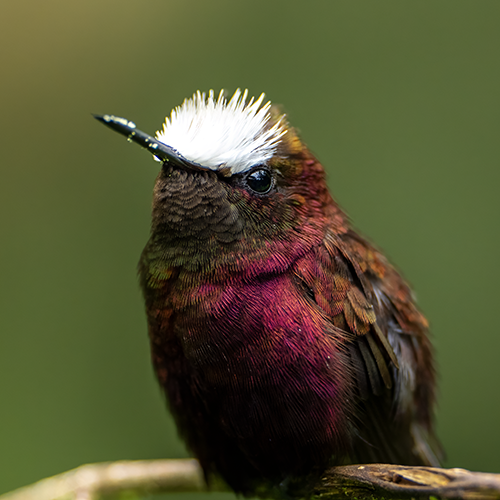
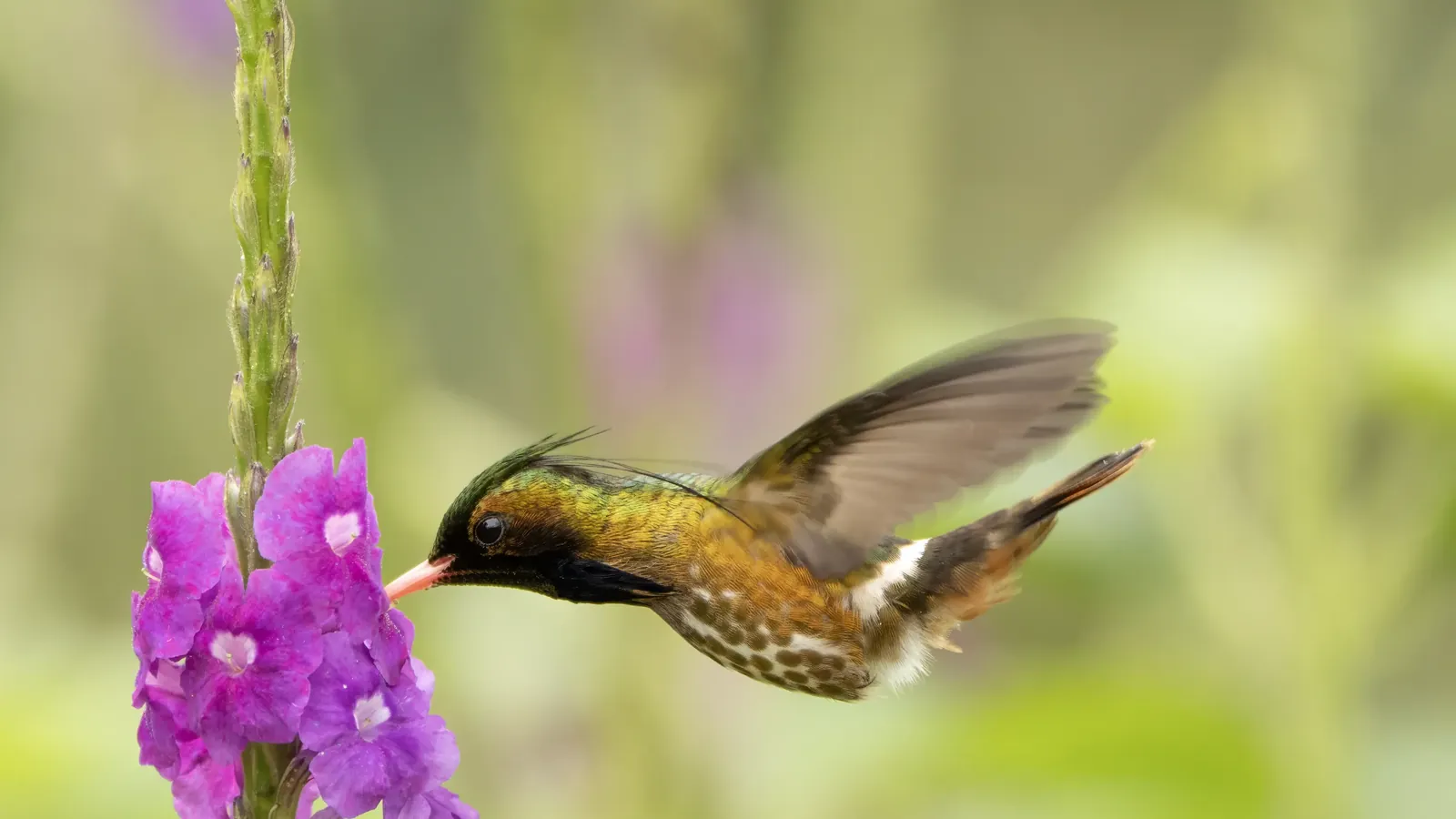
Bijagua is one of the best places in Costa Rica to find two of its most wanted hummingbirds: the Snowcap and the Black-crested Coquette.
The male Snowcap is deep wine-purple with a brilliant white cap, and weighs about as much as a coin. The coquette is even smaller, with a wispy black crest and a spotted belly, and often hovers at flowering vervain like a bumblebee. Look for them, along with sabrewings, hermits and the Violet-headed Hummingbird, at forest edges and garden flowers.
The night chorus
Frogs
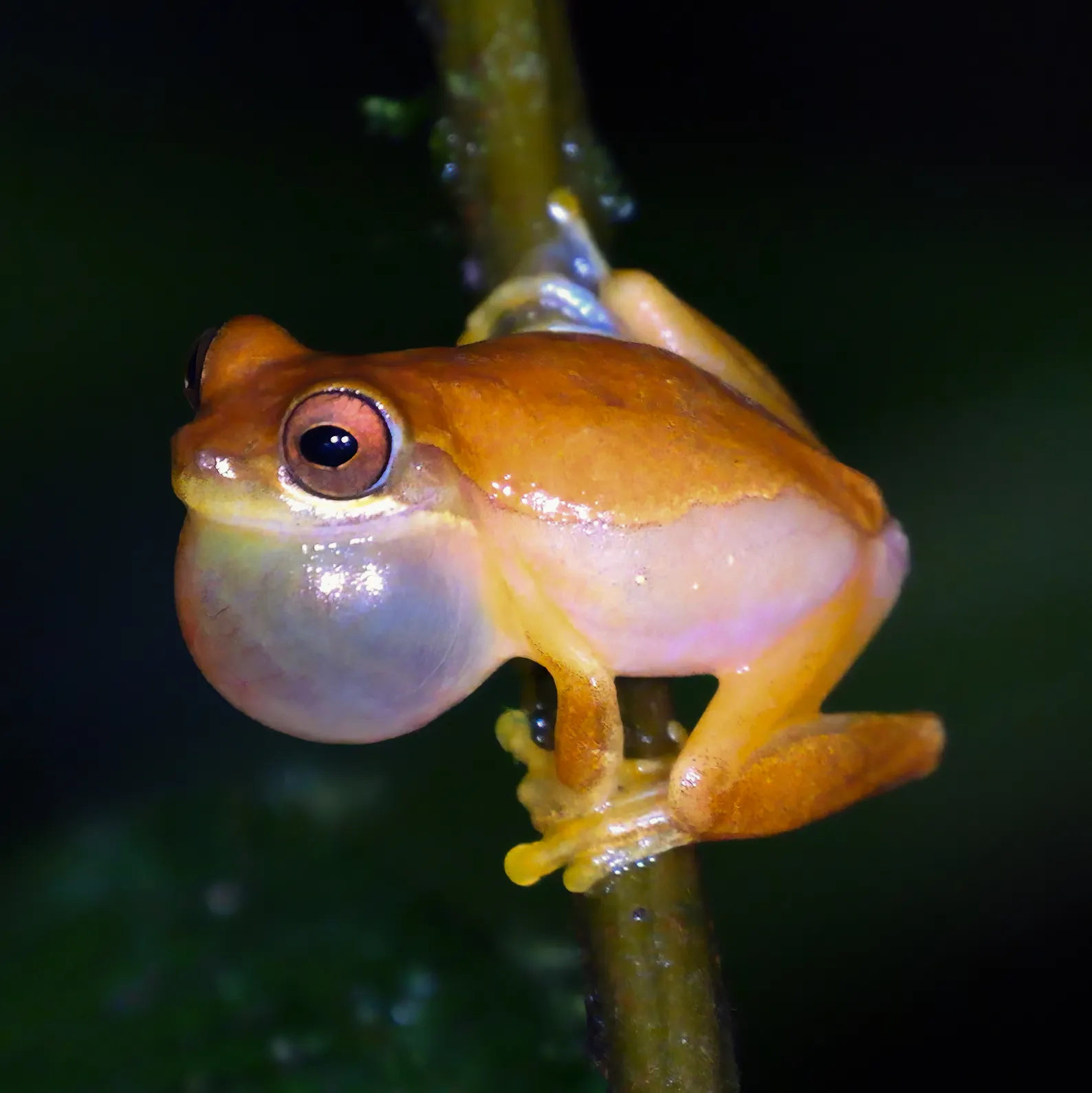
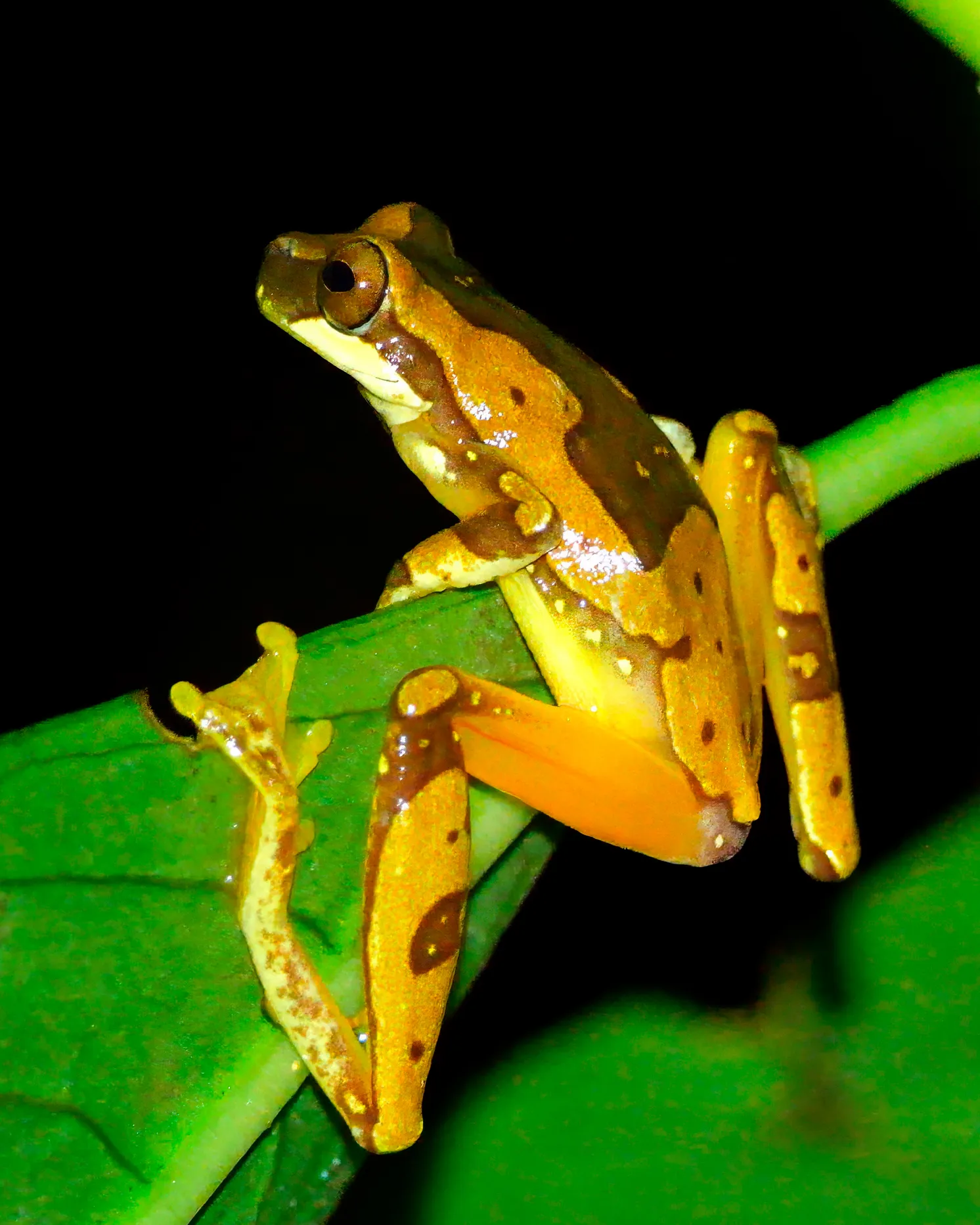
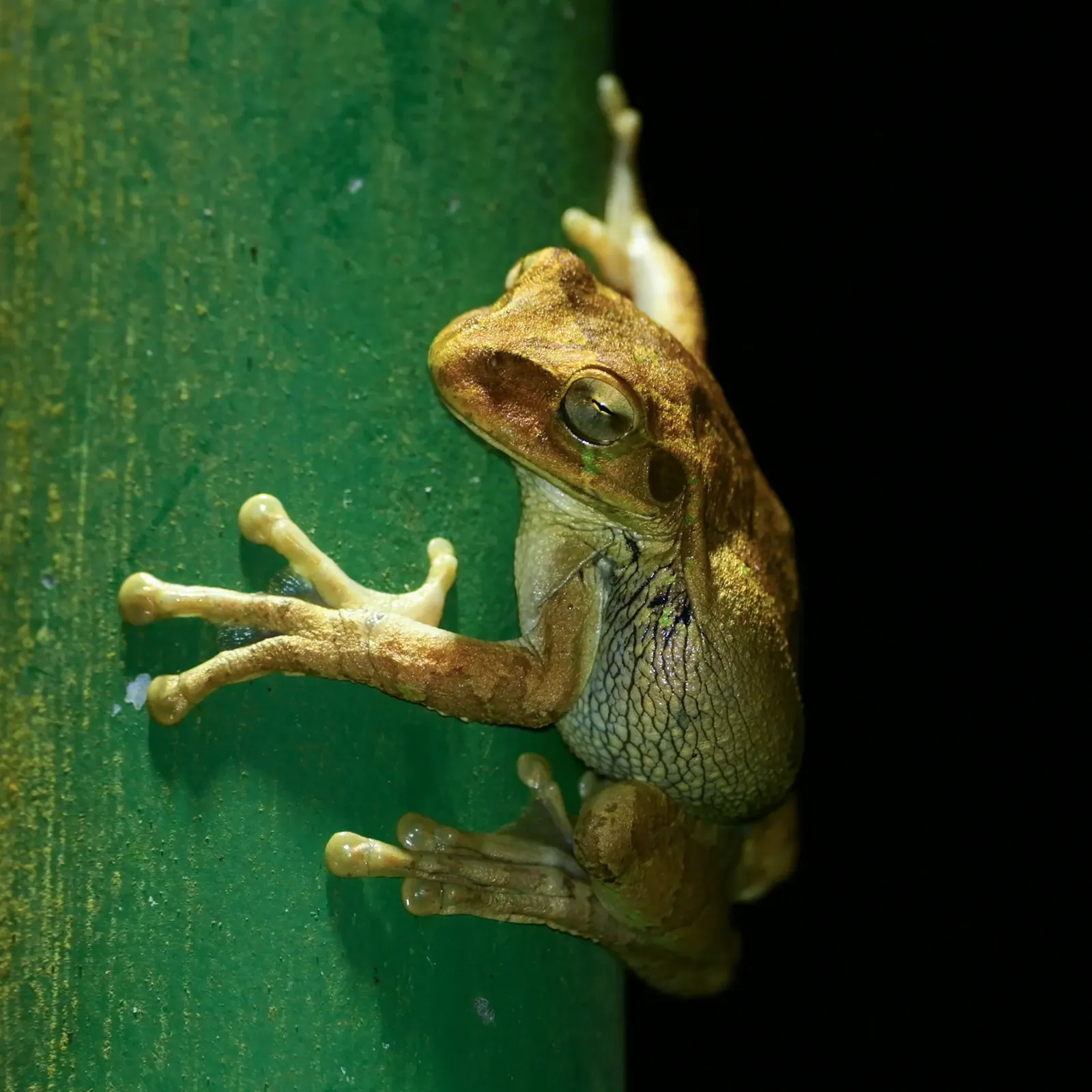
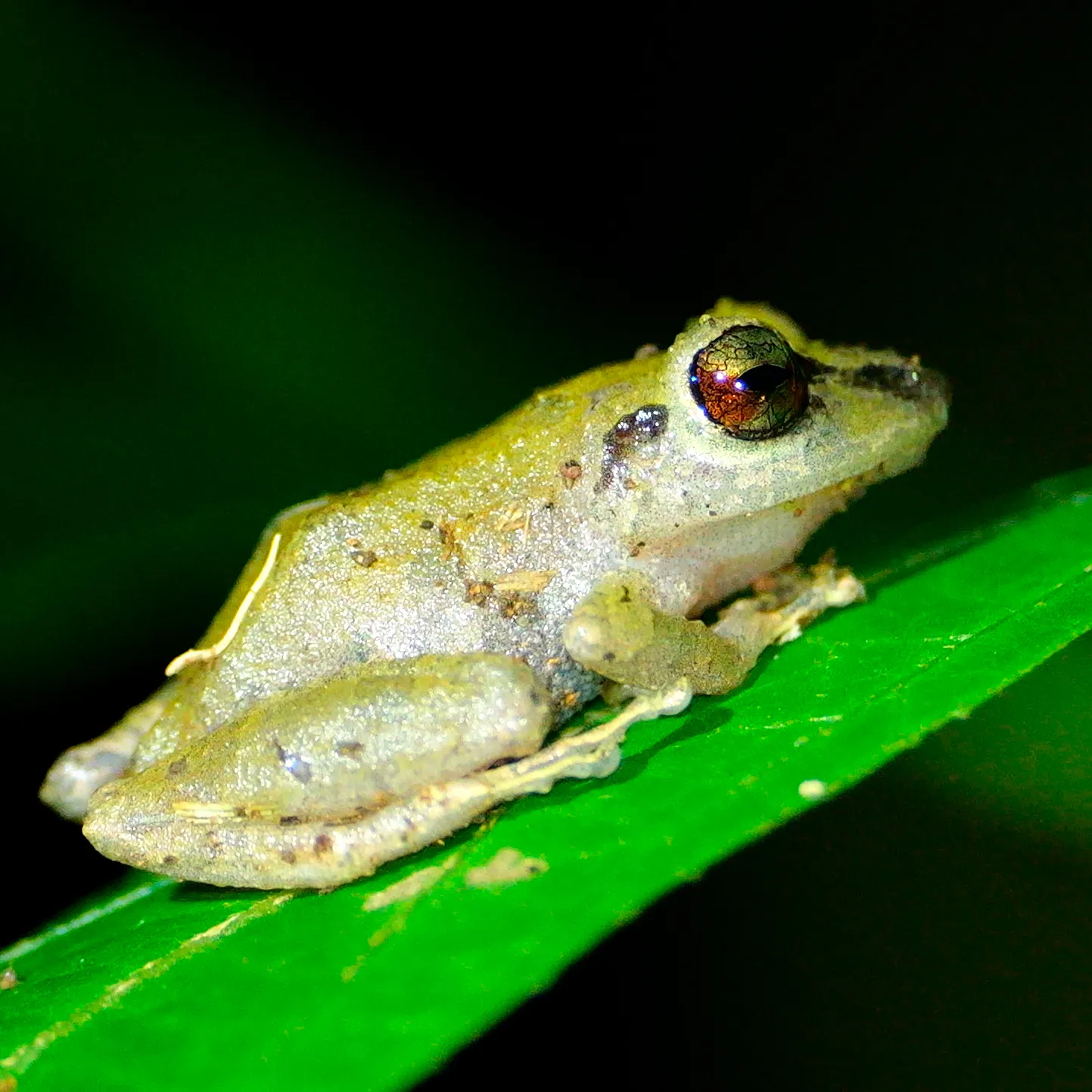
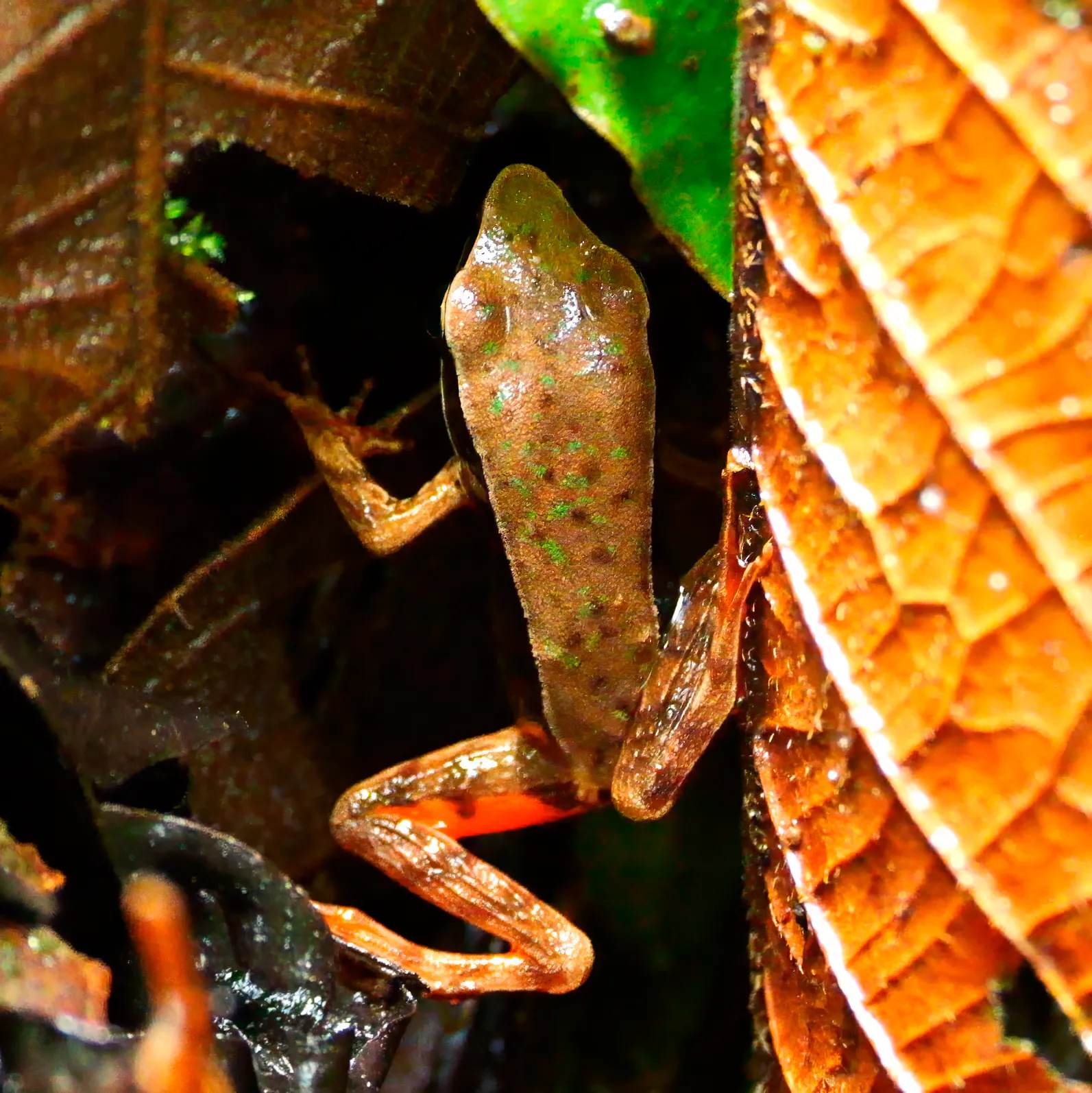
When the sun goes down, Bijagua’s wetlands and streams start to sing. Tapir Valley alone reports more than 50 frog species.
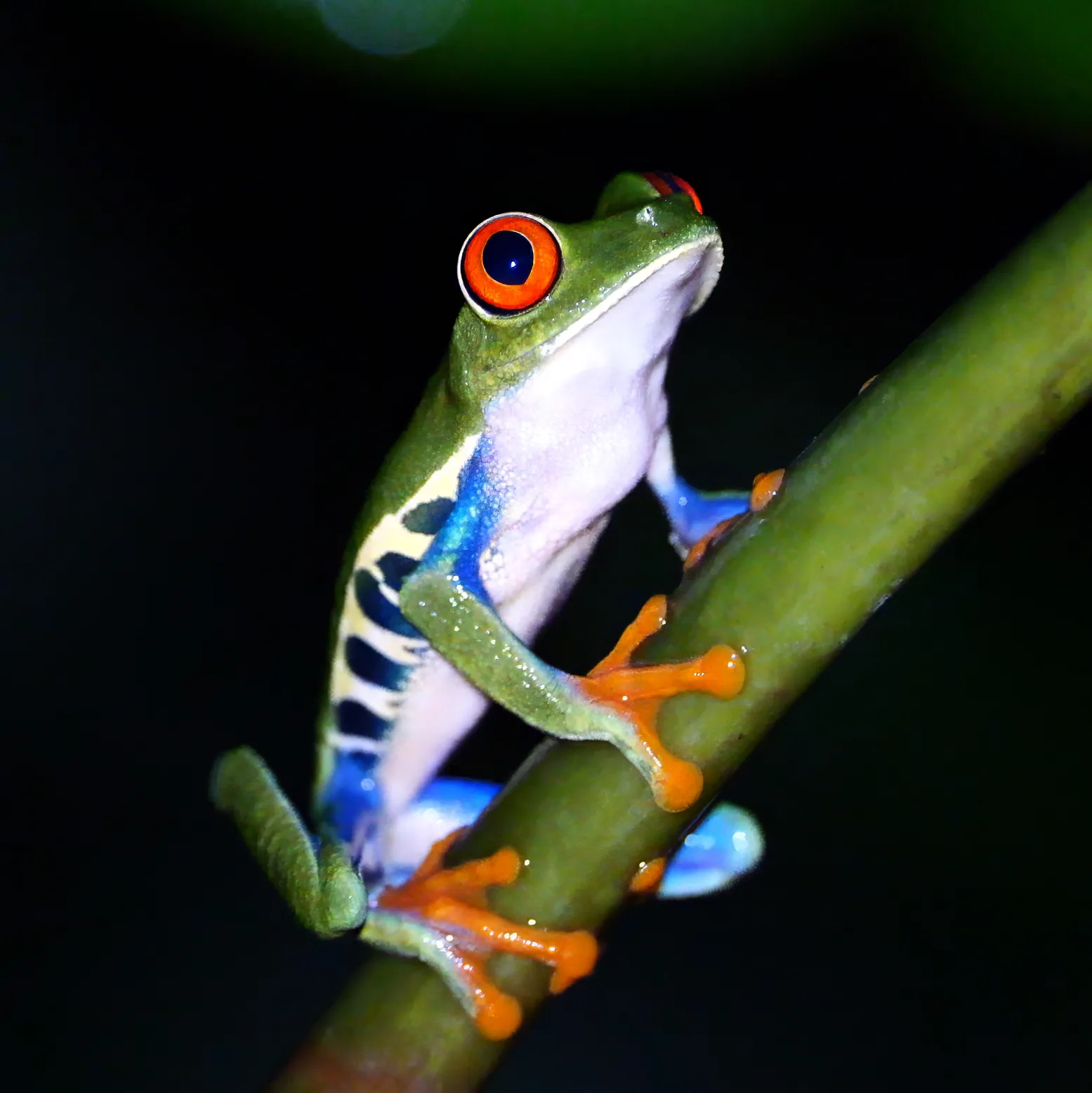
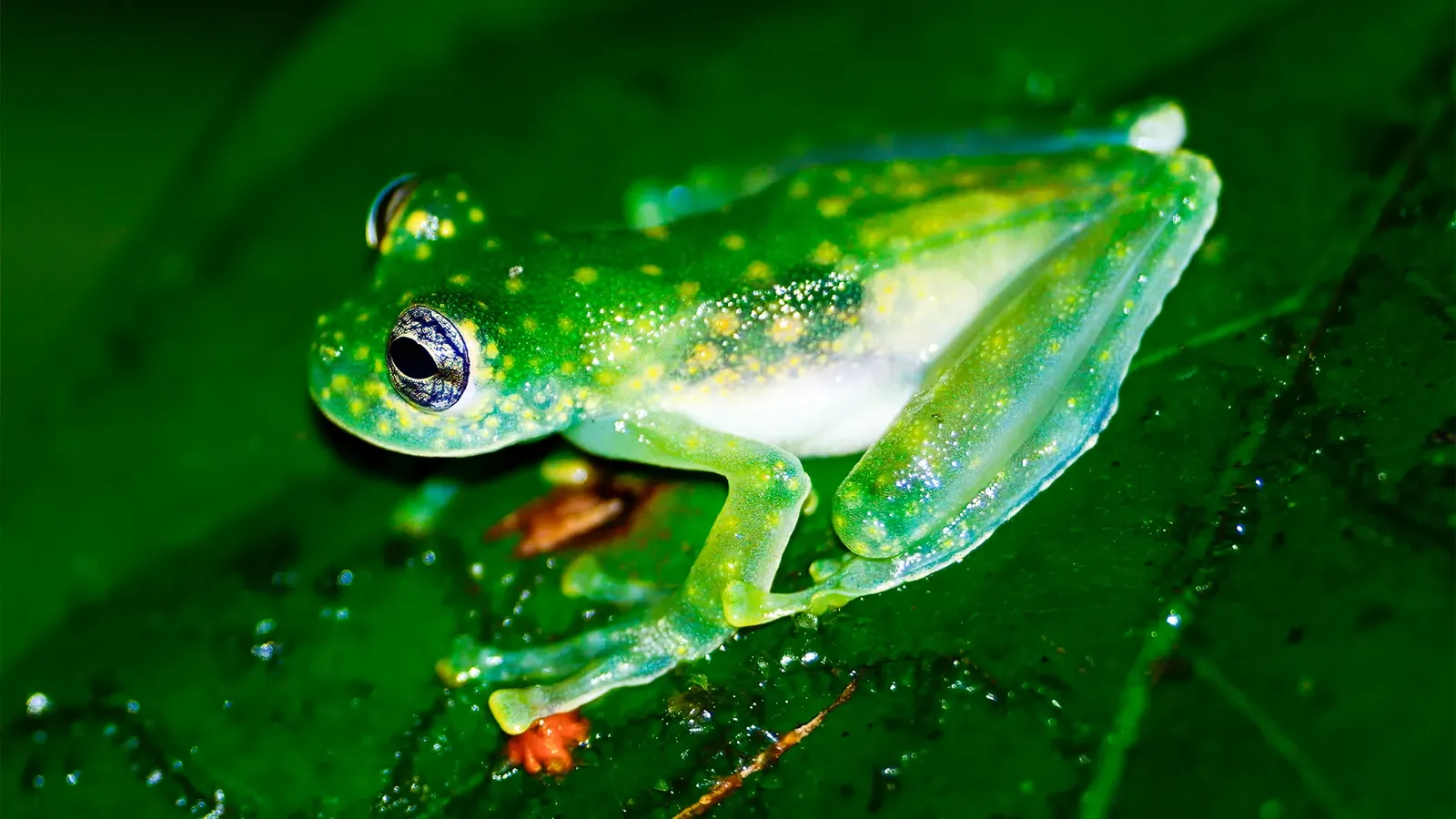
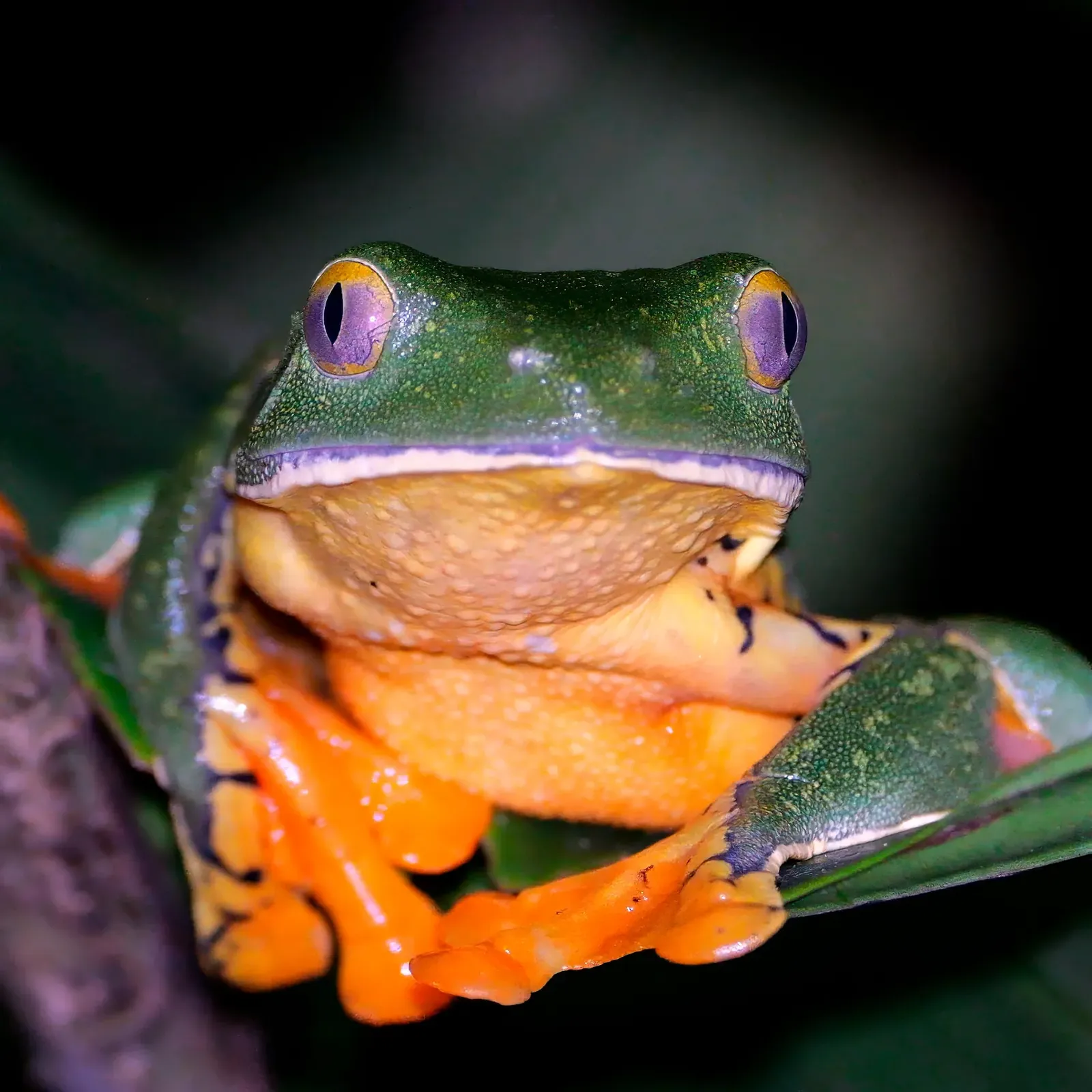
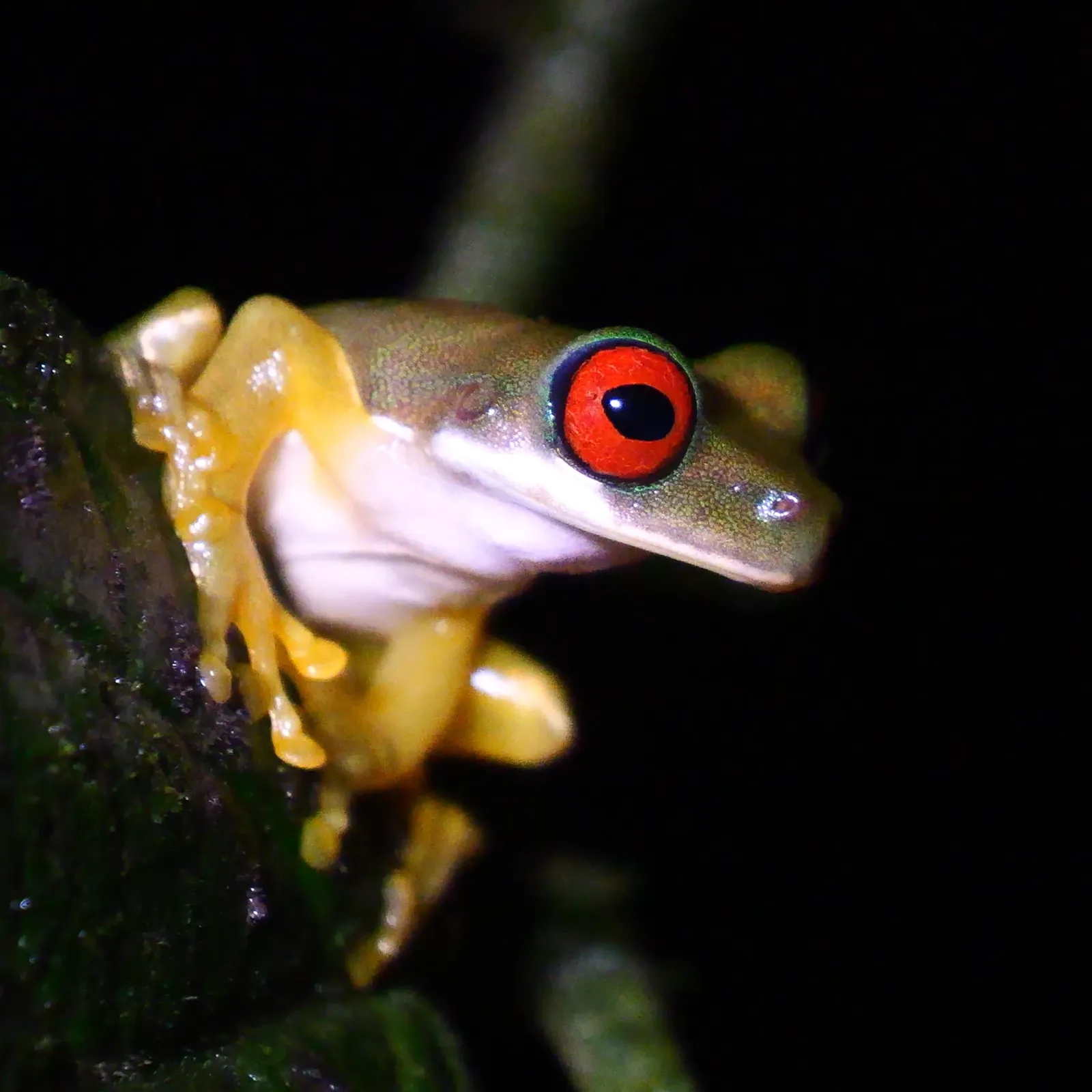
The famous red-eyed tree frog is common here, along with see-through glass frogs, tiny red-and-blue “blue jeans” poison frogs, and a whole cast of tree frogs in yellow, orange and green. Rain is good news: the nights after a downpour are the loudest and most active. A guided night walk is the way to see them, as guides know which leaves to check and how to light frogs without disturbing them.
Seen safely, with a guide
Snakes & reptiles
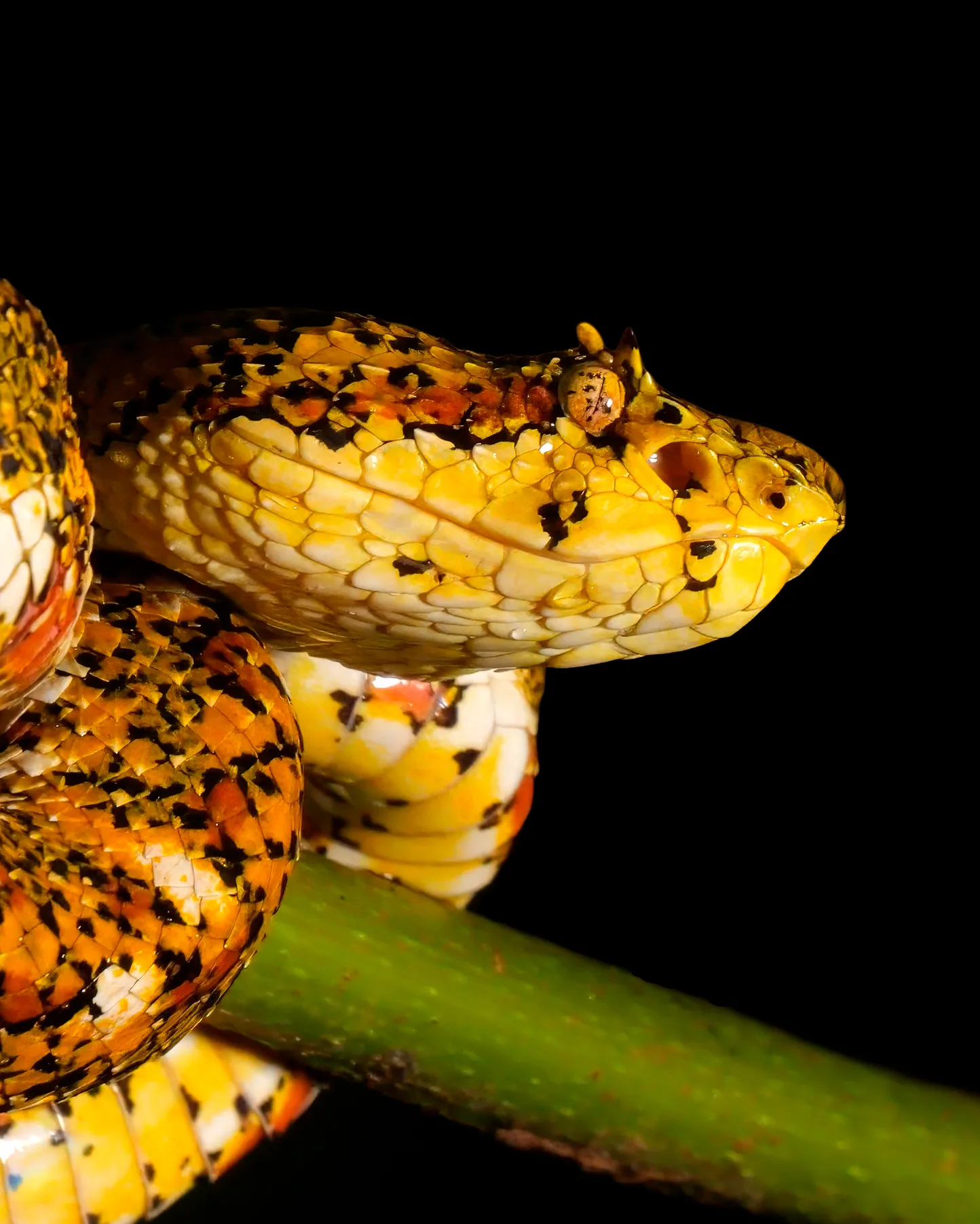
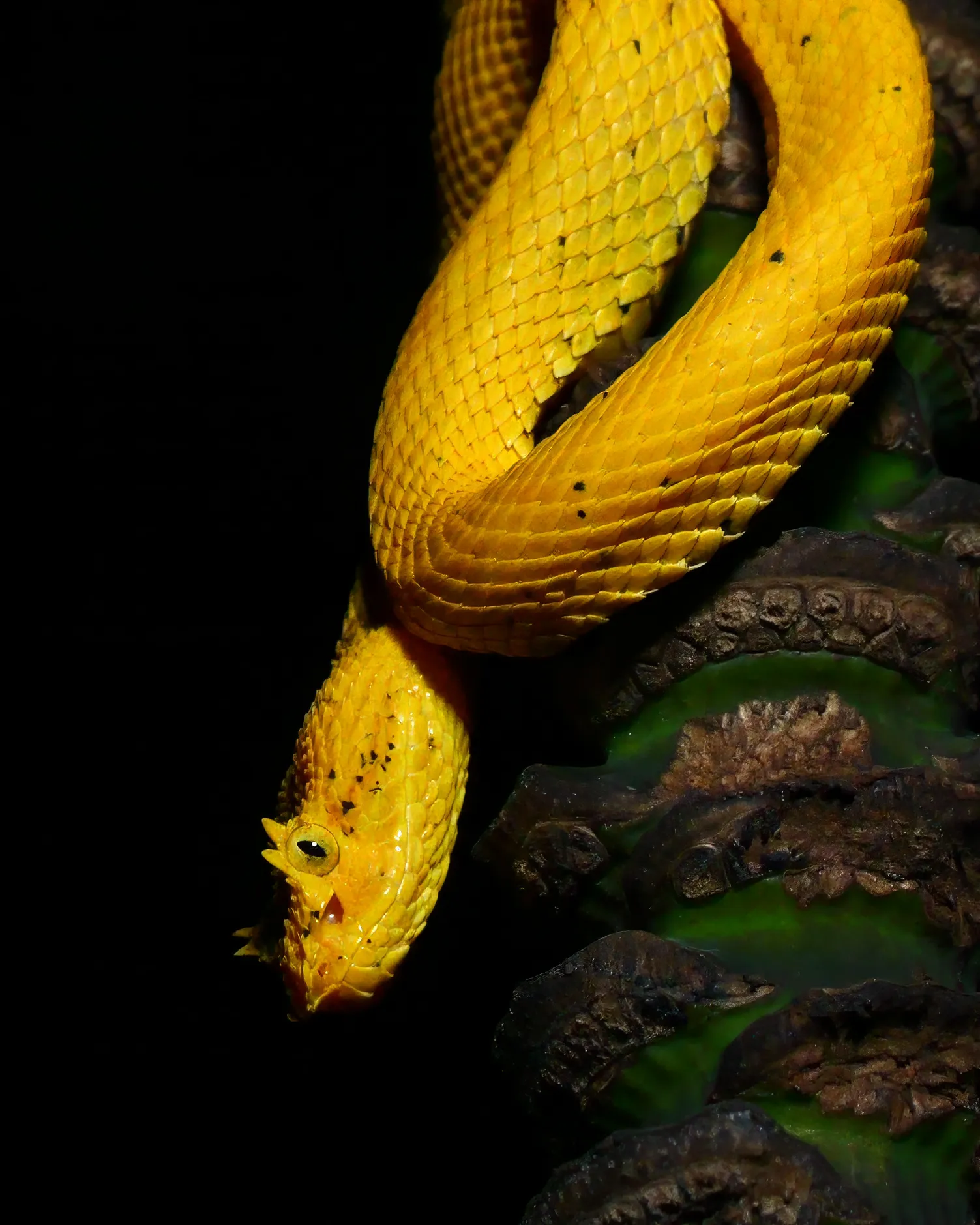
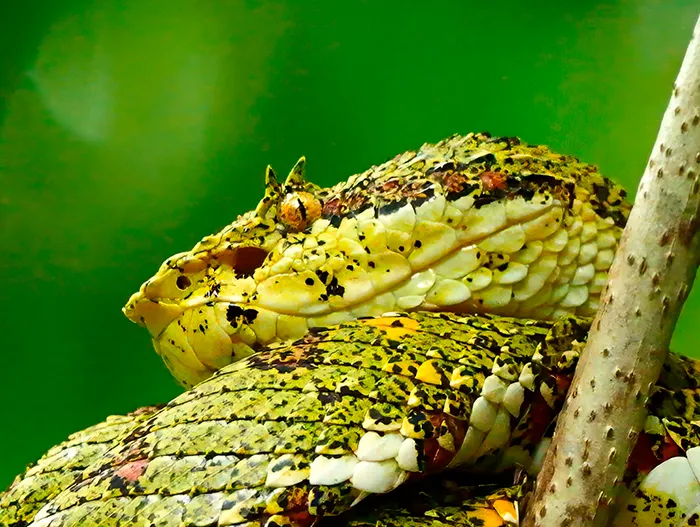
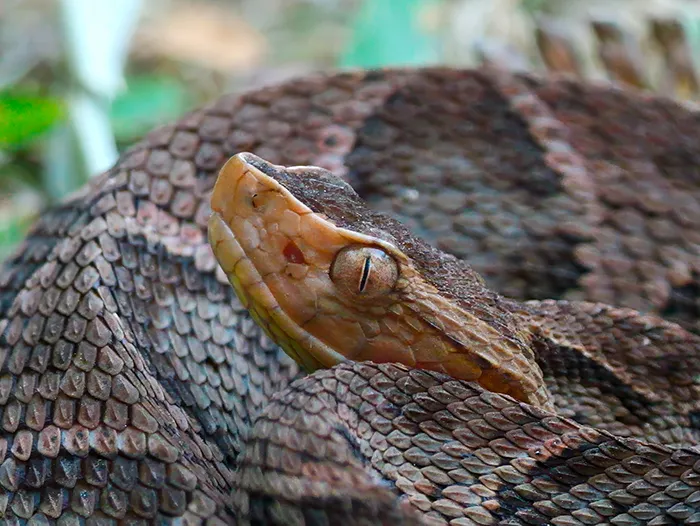
The eyelash viper is one of the most photographed snakes in the world, and Bijagua’s night tours are a great place to see one.
Named for the scales above its eyes, the eyelash viper comes in green, brown and a stunning golden-yellow form. It spends its life coiled on branches and stems, waiting. Bijagua is also home to the fer-de-lance, Costa Rica’s most dangerous snake, along with boas, coral snakes and many harmless species. All are best appreciated from a respectful distance with a guide who knows where to look, and where not to put your hands.
Mammals
Monkeys, sloths & more
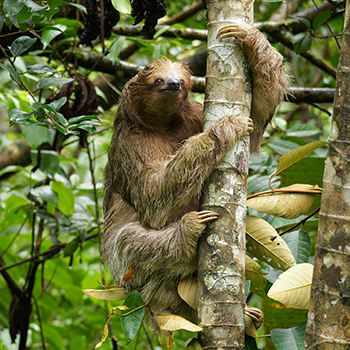
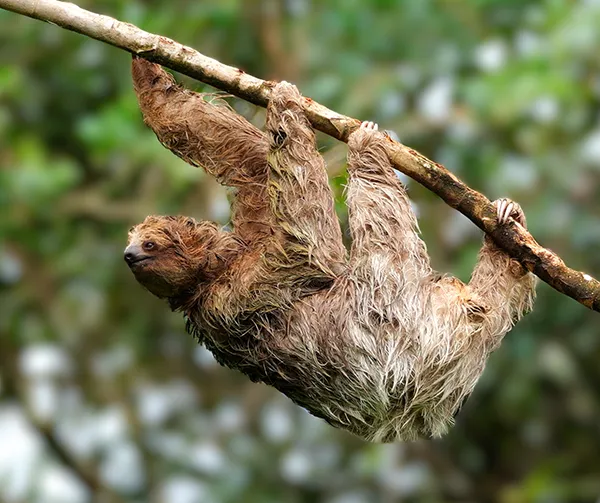
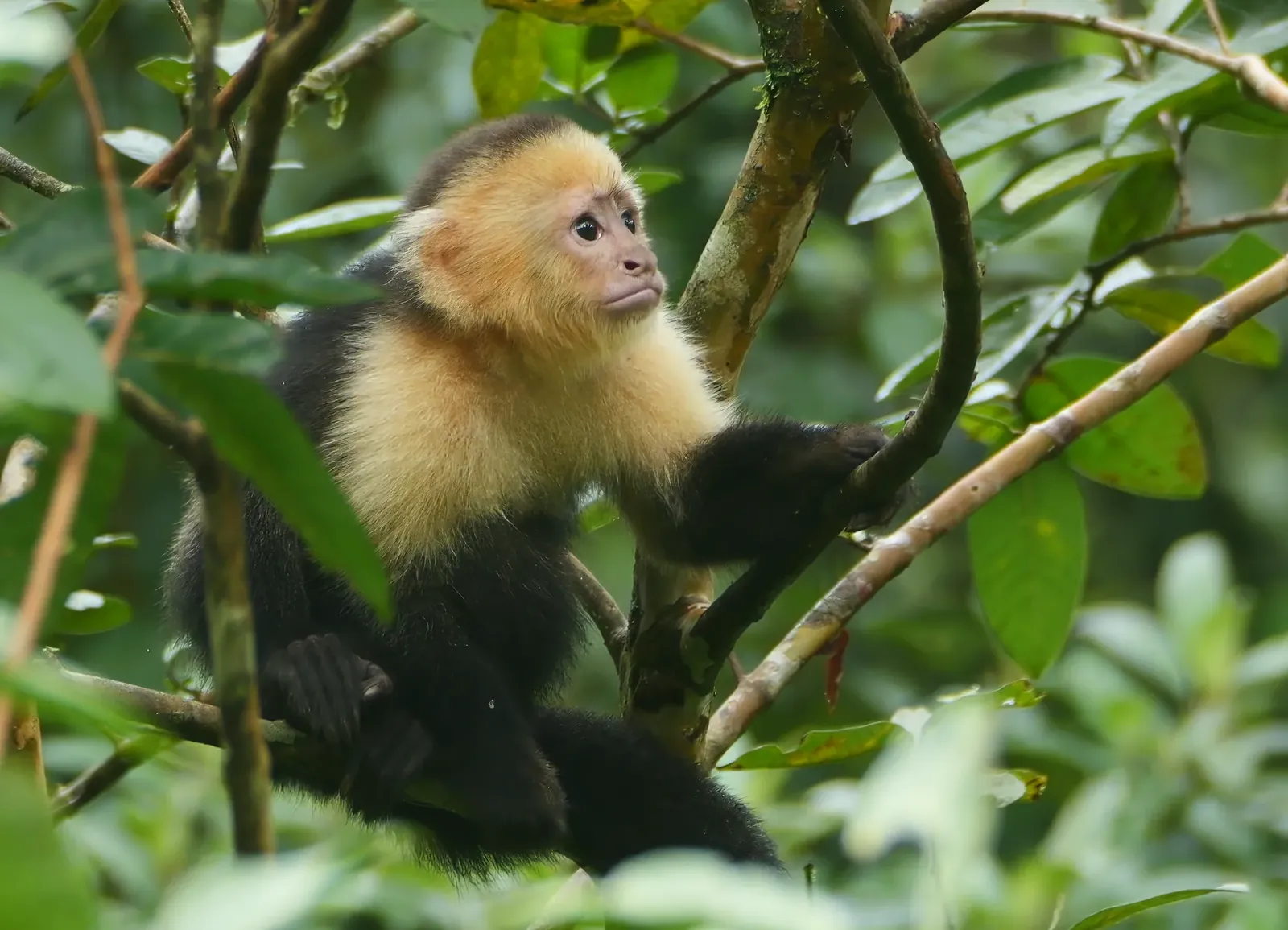
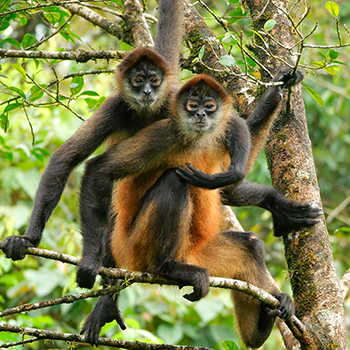
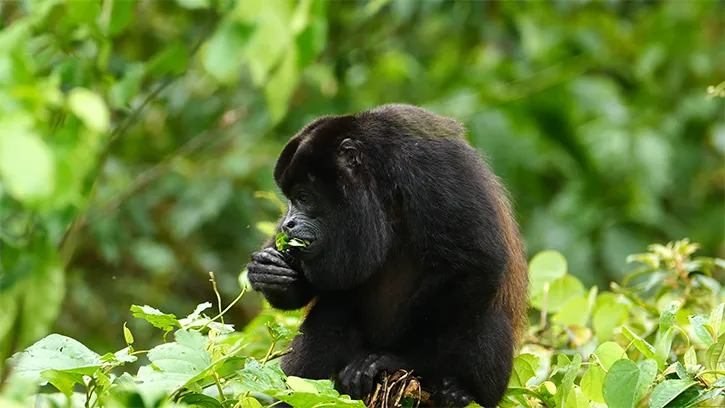
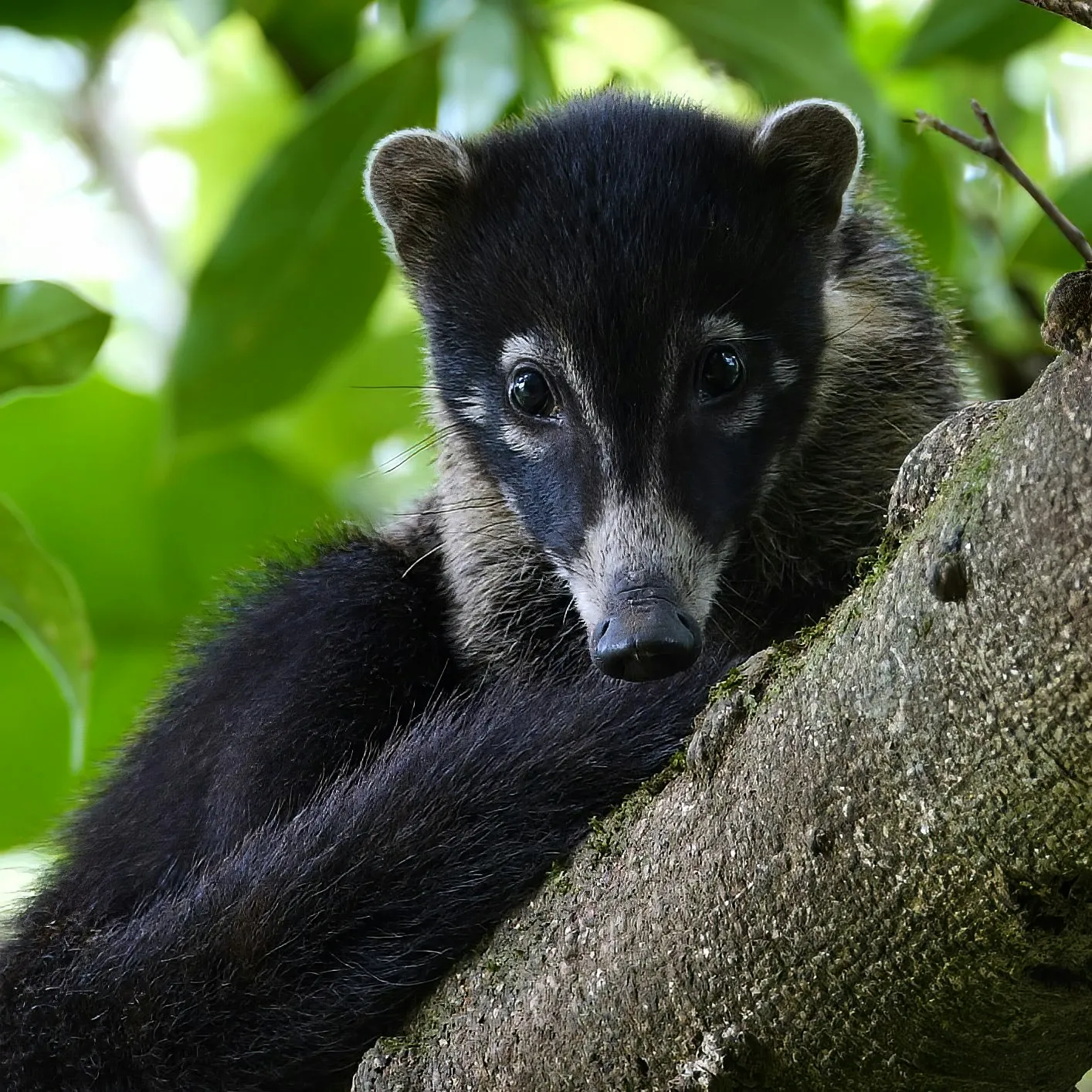
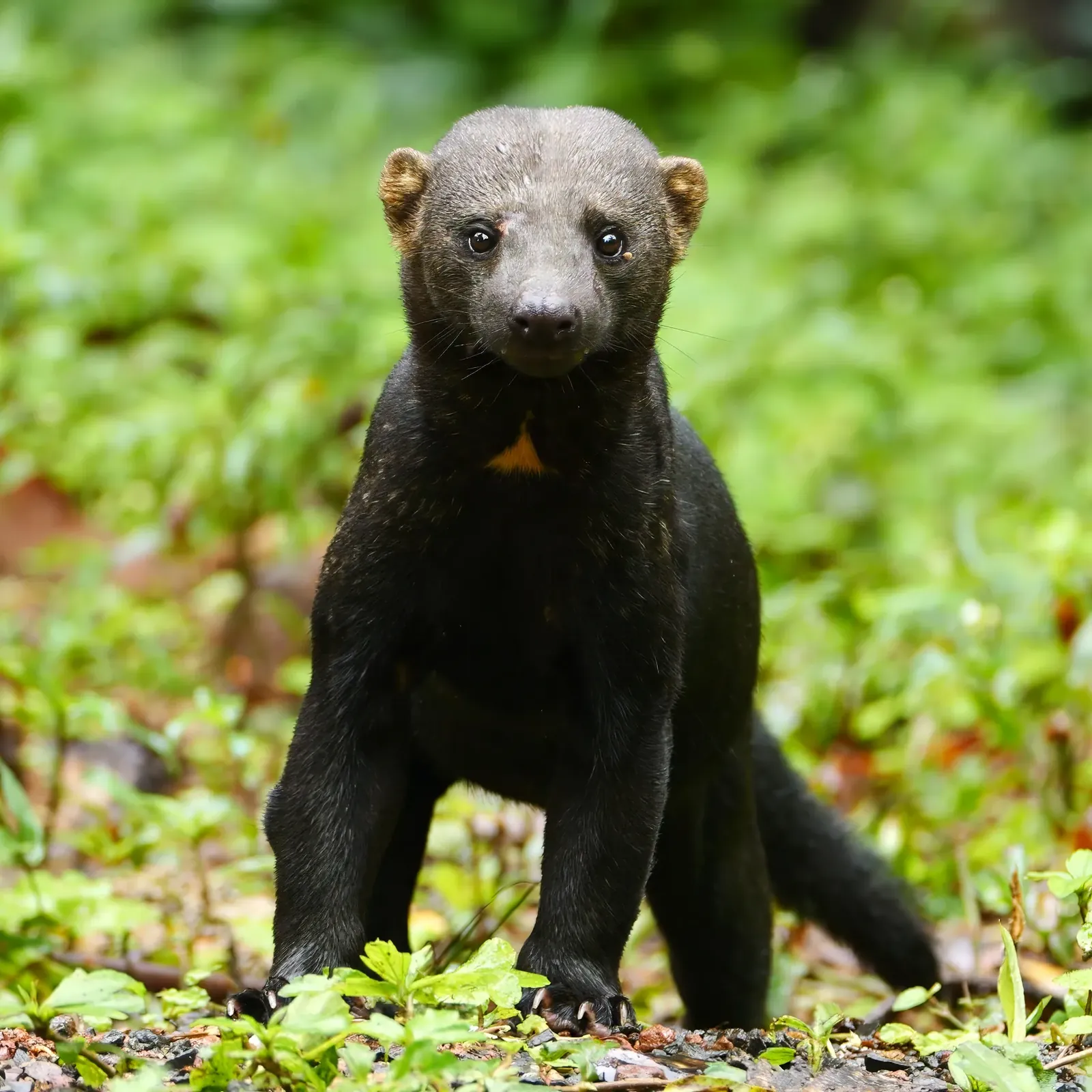
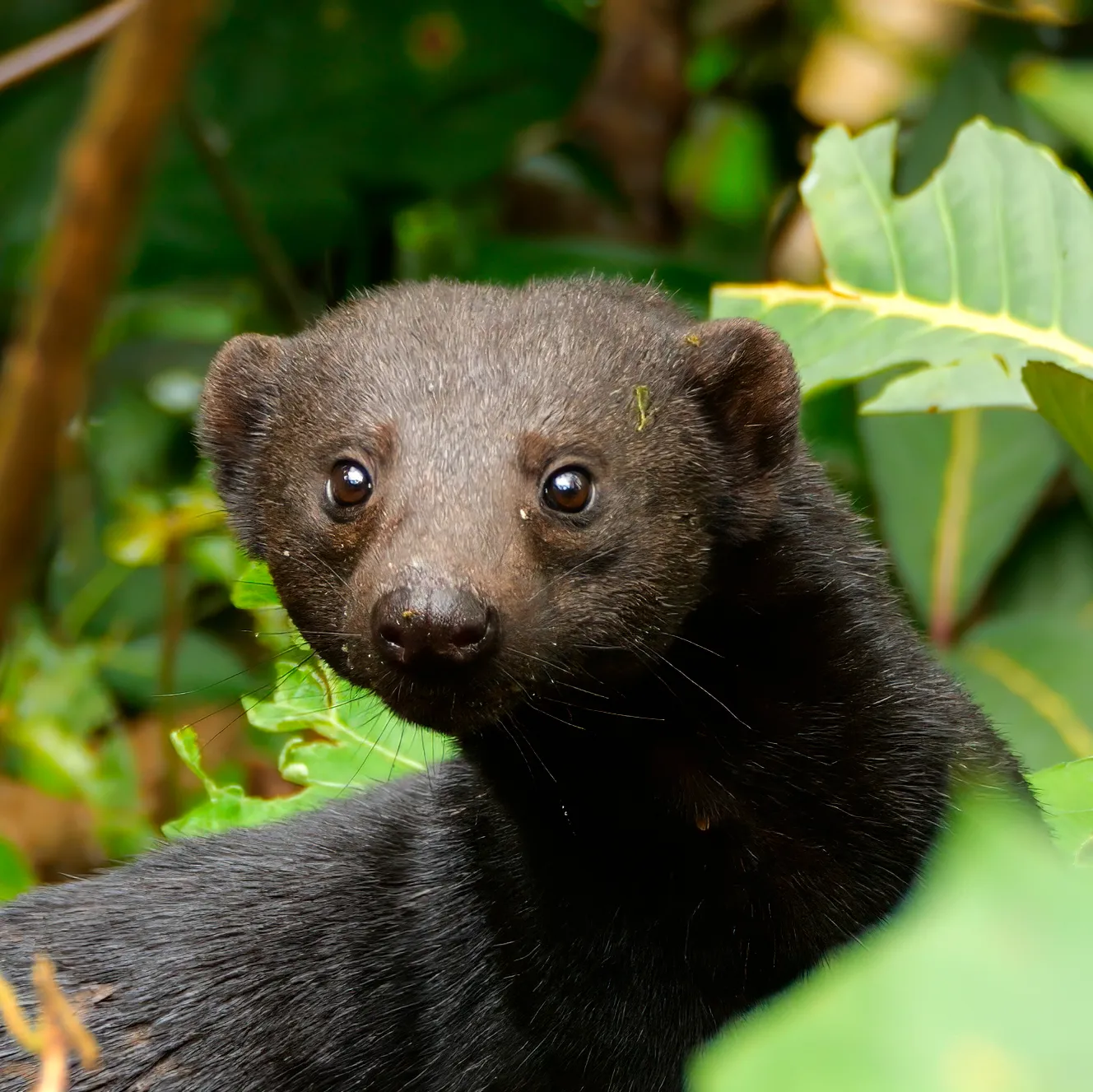
Three kinds of monkeys, two kinds of sloths, and a supporting cast of coatis, agoutis and the elusive tayra.
Howler monkeys announce the dawn with roars that carry for kilometers. White-faced capuchins forage noisily in family groups, while spider monkeys swing through the high canopy of the primary forest. Sloths are easiest to spot with a guide, and Green Hill has planted hundreds of their food trees. Keep an eye out for the tayra, a large, sleek relative of the weasel that bounds across trails in daylight.
Watch wildlife responsibly
Leave it wilder than you found it
- Never feed wildlife. It changes animals’ behavior and can make them sick or aggressive.
- Keep your distance. Use binoculars and zoom lenses, and give tapirs and snakes plenty of room.
- Stay on the trail. It protects fragile plants and keeps you away from hidden snakes.
- Go easy with lights. On night walks, keep bright beams off animals’ eyes and follow your guide’s lead.
- Drive slowly after dark. Tapirs and other animals cross the roads around Bijagua at night.
- Hire local guides. Tourism income is what keeps these forests standing.